Trent Franks Quotes
I hope I say this the right way, but I'm convinced that Israel will not trust other countries to do what they have to do to protect their own security.
United States, Congress, House. Representative Trent Franks speaking on Israel Security. Congressional Record, U.S. Government Publishing Office, 2015.


Hitler ridiculed the letter after receiving it in public speech.


With this statement, Sadat did what no Arab had ever dared to do—offer to negotiate with Israel. It led to the great peace breakthrough which produced the Arab-Israeli peace.


Every major Western power and Japan were looking to control parts of China for their own mercantile advantage. The Emperor, her adopted son, had stated that under no circumstances would the Chinese fight, but Cixi issued this decree, in effect, overruling the Emperor—a remarkable occurrence.


While to Madison the principle that “war is better than tribute” was “settled policy”, there were many who disagreed. See {640867} as an example.


There were many who thought that the Russians would view the Mutual Security Act as aggressive and they might respond with some kind of aggressive retaliation and this could lead to war. Others felt that containment would reduce the likelihood of war.


This was written when the United States was not a dominant military power. At the beginning of the 20th century, the U. S. had the same size military as Argentina. It was France, German, Turkey and England who had the military superiority and it was they who tended to find excuses for war. After WWII, the U. S. was dominant and was involved with a number of wars and military incursions, often with nations that had not attacked the U.S. Korns’ principle was most dramatic when the George W. Bush administration invaded Iraq on the excuse that the Iraqis were developing weapons of mass destructions and then might attack the United States. After the successful invasion, the excuse was shown to be hollow as there were no signs of sophisticated weapons development.

See {633152} for more of the reasoning for this point. “Neocon” is a shortened form of “neoconservative”. At the time the neoconservatives were advocating use of military intervention in the Middle East. Munich was the German city in which British Prime Minister notoriously tried to appease Hitler and the Nazis. This led to WWII and has become the historical icon for appeasement of a powerful tyrant and the cost of such.

After the attack on Fort Sumter, the South Sent “diplomats” to negotiation with the Government. Unfortunately for all, the South really was not open to negotiations as they only had two predetermined positions they would agree to: The first was that the Government should guarantee the perpetual right of states to have slavery if they wished and that fugitive slaves would be returned by the non-slave states. The second was that the Union should recognize the Confederacy as an independent nation and have peaceful relations between the two. The first was impossible to deliver even if the Union would agree to continue slavery, there was no way that the Federal Government could enforce the return of fugitive slaves from many northern states where they were free the second they set foot in the state, and the Northern states demanded States Rights and not being forced to return Fugitive Slaves forcing the Southern States to oppose States Rights when it came to Fugitive Slaves while favoring it for slavery itself. The Federal government could not enforce the Dred Scott Decision under the pro-South Buchanan administration. And Lincoln and most of the Northern Politicians would not accept a complete dissolution of the Union. There are no other possibilities the South would accept and there was really nothing to negotiate.


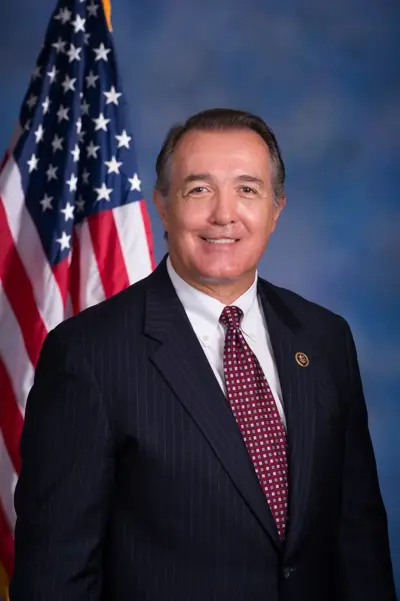
Trent Franks is a former American politician and businessman who served as the U.S. Representative for Arizona's 8th congressional district from 2003 to 2017 (numbered as the 2nd district from 2003 to 2013). He is a member of the Republican Party. Congressman Franks served on the Judiciary and Armed Services Committees and was Vice Chairman of the Strategic (Nuclear) Forces Subcommittee, and Chairman of the House Subcommittee on the U.S. Constitution.
