Robert Purvis Quotes
I elect to stay on the soil of which I was born and on the plot of ground which I have fairly bought and honestly paid for. Don't advise me to leave, and don't add insult to injury by telling me it's for my own good; of that I am to be the judge.
Purvis, Robert. "Letter to Joseph Engle." The Liberator, 16 Dec. 1853.

Manji is a Canadian citizen who immigrated from Pakistan.


Arguing that the Arabs will never agree willingly to a Jewish state:


Justifying selling part of the reservation as a waste dump to the distress of neighbors:


The Cherokee were settled Indians with farms and ranches. These lands were coveted by many whites and many including President Andrew Jackson was trying to get the Cherokee to trade their land for land in the Oklahoma Territory, despite the white promises of the past Ross took the case to the Supreme Court which ruled that the Cherokee land was theirs and it must be protected for them by the government. But President Andrew Jackson, disobeying the Supreme Court Opinion, forced the Cherokee at gun and bayonet point onto the Trail of Tears to Oklahoma, totally reneging on this quotation and deeds and promises of the past.


This is one of the first Policy Statements of the new Republic about the Indians. Essentially, although the government policy was reasonable and fair, public opinion was totally different and the leadership could not persuade the people on this point. One complicating factor was the fact that most of the Indian tribes had overtly or covertly sided with the British in the Civil War. Many Indians were exiled to Canada. Even the Indians who were American allies, had their lands encroached upon however.


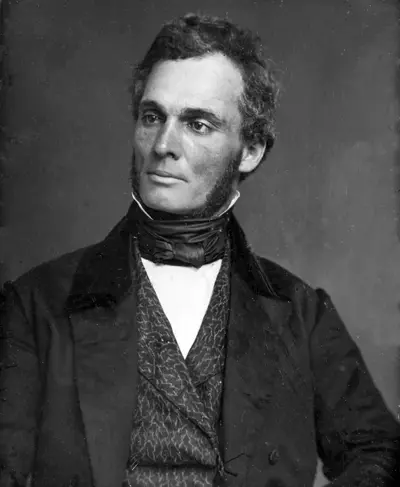
Robert Purvis was an American abolitionist in the United States. He was born in Charleston, South Carolina, and was likely educated at Amherst Academy, a secondary school in Amherst, Massachusetts. He then spent most of his life in Philadelphia, Pennsylvania. In 1833 he helped found the American Anti-Slavery Society and the Library Company of Colored People. From 1845–1850 he served as president of the Pennsylvania Anti-Slavery Society and also traveled to Britain to gain support for the movement.
