Elizabeth I Quotes
I do not so much rejoice that God hath made me to be a Queen, as to be a Queen over so thankful a people. Therefore I have cause to wish nothing more than to content the subject and that is a duty which I owe. Neither do I desire to live longer days than I may see your prosperity and that is my only desire.
Marcus, Leah S., Janel Mueller, and Mary Beth Rose, eds. Elizabeth I: Collected Works. University of Chicago Press, 2000, p. 337.

Centuries later leaders have studied this speech and the actions taken by Elizabeth as the epitome of model leadership and morale building at a time of crisis. What made the event more dramatic were two monarchial norms of the time understood by all the citizens. Monarchs did not open themselves to the risk of very close proximity to their armies with only a handful of retainers. A dissident military commander could kill or capture the monarch as most soldiers had little loyalty to anyone but the commander who paid them. Second, monarchs usually abandoned battlefields where the outcome was uncertain and if not present certainly stayed away. Elizabeth in breaking both these norms was taking obvious risks with her own life (as a women for whom it was even more unexpected) and welfare to share the immediate fate of her subjects. It explains why an absolute monarch was extremely popular with her subjects—great leadership.


The Princess was Victoria who was to become the Sovereign of England but at the time was only 11 years old. The Duchess was her mother and guardian and responsible for her upbringing and education. However, note that because a future sovereign was involved, the official Church of England was required by the existing law to provide oversight to her upbringing, and this memo was one of the Duchess’s periodic report to the Church. Also it is interesting that this young princess, destined to be the most powerful person in the world at the time, was brought up to “live for others” and not to be pompous or dazzled with power. The Duchess did a terrific job because not only was Victoria to reign over the British Empire for 62 years, but Queen Victoria is regarded by many historians as one of the best, if not the best, monarch who ever reigned anywhere.

Marquis of Lansdowne. What makes this quotation so noteworthy is the illustration of a political rarity. The leader of the country calls in a leading politician and asks for advice on a current political problem. Politicians almost always have advice to give even when it is not wanted or asked for. But the total number of occasions where the Politician had no good advice could be measured on the fingers of one hand. This is the most classic. The problem was that the previous government had collapsed for want of a majority of Parliament, and the Queen was seeking advice on which of the leading politicians she should ask to try and put a government together. However, no one was sure that any of the politicians could muster enough support to form a government, but everyone had an opinion except Lord Lansdowne.

The Emperor had made his brother King of Holland to function as a French military Governor. But Louis Napoleon. Who took an oath as the King of Holland, took his oath and responsibilities seriously and tried to serve Dutch interests which his brother cared for not at all. Louis Napoleon had an impossible situation with dual loyalty that was incompatible.


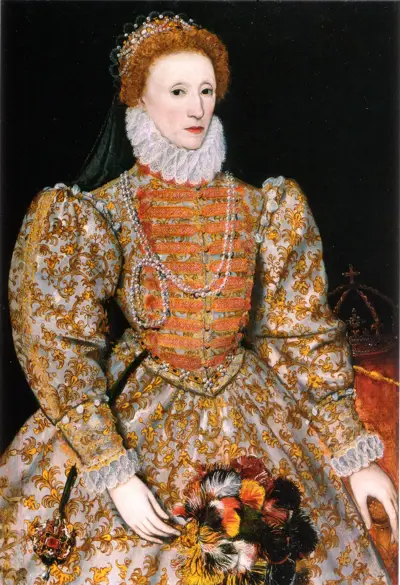
Elizabeth I was Queen of England and Ireland from 17 November 1558 until her death in 1603. Sometimes called the Virgin Queen, Gloriana or Good Queen Bess, Elizabeth was the last of the five monarchs of the House of Tudor.
