Charles G. Boyd Quotes
I do not believe that reorganization will fix what is wrong with our intelligence community….Failures were caused by performance, not organization.
Charles G. Boyd, Air Force General & Executive Director for the Hart-Rudman Commission, President, Business Executives for National Security, Summary of the Commission’s conclusions, Senate Committee Testimony, Improving Intelligence August 18, 2004
Sourced by: Eigen's Political and Historical Quotations


The argument here is that secret intelligence, comes from sources and people whose views and claims are not subject to the test of public scrutiny representing a narrow information sample. Publicly available information, while it does not include secrets that the enemy wants to keep secret, does represent vetted and processed information with challenges and contradictions also publicly available. Proponents argue that it is more reliable. Secret intelligence has produced some of America’s worst debacles. An example is the Bay of Pigs. Secret intelligence assured Presidents Eisenhower and Kennedy that the majority of Cuban people was hostile to the Fidel Castro government. If freedom fighters would land in Cuba, the vast majority of Cubans would join them. When the invaders landed, most Cubans were so outraged that their country was being invaded that there was massive public support for Castro’s troops who quickly captured the invaders who were waiting for the popular uprising.


When he became a candidate, he modified this position and stated that he would abolish both agencies spying on Americans activities but not necessarily abolish all the functions of the agency.


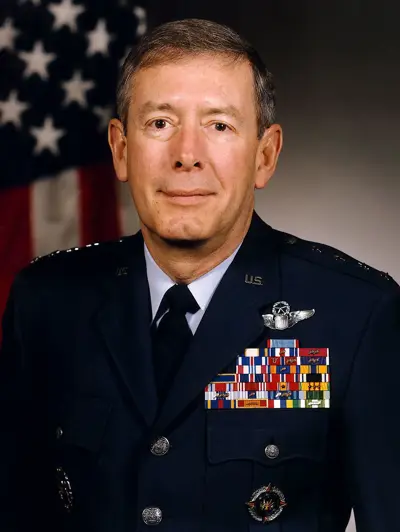
Charles Graham "Chuck" Boyd is a retired four-star general of the United States Air Force. Boyd is a highly decorated combat pilot who served in Vietnam and is the only Vietnam War prisoner of war (1966–1973) to reach the four-star rank (1992). His final Air Force assignment was as deputy commander in chief, U.S. European Command, Stuttgart-Vaihingen, Germany. He retired from the Air Force in 1995 and has remained active in the national security realm, including as a program director of the Council on Foreign Relations and as president of Business Executives for National Security. He is a member of the guiding coalition of the Project on National Security Reform.
