Cofer Black Quotes
I was an intelligence officer, not a policy-maker.
Black, Cofer. Testimony. National Commission on Terrorist Attacks Upon the United States, U.S. Government Printing Office, 13 Apr. 2004.


The major idea of intelligence agencies in a democracy is for the intelligence agencies to provide the policy makers with facts on the ground and data with which they can make sounder policies. However, many times the policies of the administration is so firm that the political ideology restrict not only the kinds of analysis the intelligence agencies do, but in some cases shape or control the conclusions of otherwise sound studies. The influence of Vice President Cheney on the CIA and the invasion of Iraq.


The CIA did not have a long tradition. It was created after WWII when the OSS was are espionage organization had been disbanded In the early days of the Cold War, the CIA went rogue and engaged in covert activities without the knowledge and approval of the President and his cabinet. General Maxwell Taylor conducted a thorough investigation and the agency was brought under control. There hav been several more incidents since then and every few years there have been additional scandals of unauthorized operations which were harmful to American interests and values. In a democracy it is always hard to control a secret organization. Actually, at the beginning of WWII, we had almost no espionage capability and President Roosevelt had a series of friends who provided him with intelligence until William Donavan had time to establish the OSS which did such a wonderful job.


even though in this case the objective The State Department, the Defense Department and most important President Kennedy had decided to get rid of Diem. Most of the Central Intelligence Agency thought that this was a very unwise policy, because Diem was a known risk, and the people who would replace him and their talents and policies were unknown. The negatives of Diem—the facts that he, a Christian, was persecuting the majority Buddhists, was totally corrupt, and not a very good leader was less distressful to the CIA than to the President and the other agencies as the intelligence agency frequently not only tolerated “offensive” allies, but actually employed them including war criminals. Another importance of this quotation is that it shows that it was by no means certain that the CIA would always follow the orders of the President and the government policy makers. Colby, who was not the agency director at that time but was the head of the South East Bureau, was one high level official who argued that the policies should always be followed even if they were unwise or foolish. Another importance of this quotation is that it illustrate a common error that administrations are frequently forced to make: making a policy decision to eliminate a problem while not having much of an idea of what the alternative or consequence would be when the policy is implemented. The Syrian Civil War in 2013 was a good example. The Government side appeared to have used Chemical Warfare on Civilians and public opinion demanded that we do something. However, having a no-fly zone or any of the alternatives to prevent (punish) the government for the Chemical Warfare would strengthen the rebel side which was made up of numerous factions—some of which were known Islamic fundamentalist terrorists and jihadists. If the balance of power were tipped toward the rebels, the consequence for the American national interests were unknown—just as the consequence of ousting Diem was unknown and turned out to also be bad and was probably worse.

The American Embassy in Berlin had wiretapped the telephone and telegraph wires of the German Foreign Ministry. The man who did that was hired by Secretary of State Lansing as the first employee of the new unit.


The argument here is that secret intelligence, comes from sources and people whose views and claims are not subject to the test of public scrutiny representing a narrow information sample. Publicly available information, while it does not include secrets that the enemy wants to keep secret, does represent vetted and processed information with challenges and contradictions also publicly available. Proponents argue that it is more reliable. Secret intelligence has produced some of America’s worst debacles. An example is the Bay of Pigs. Secret intelligence assured Presidents Eisenhower and Kennedy that the majority of Cuban people was hostile to the Fidel Castro government. If freedom fighters would land in Cuba, the vast majority of Cubans would join them. When the invaders landed, most Cubans were so outraged that their country was being invaded that there was massive public support for Castro’s troops who quickly captured the invaders who were waiting for the popular uprising.
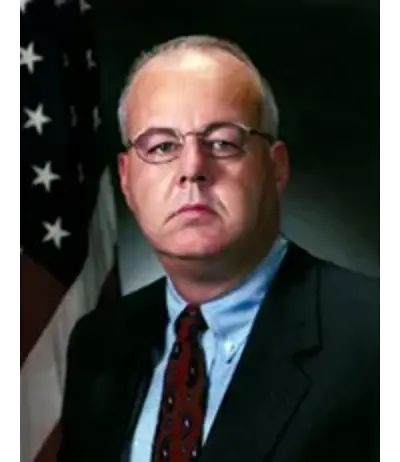
Joseph Cofer Black (born 1950) is a former Central Intelligence Agency officer who served as director of Counterterrorism Center in the years surrounding the September 11th attacks, and was later appointed Ambassador-at-Large and Coordinator for Counterterrorism at the State Department by President George W. Bush, serving until his resignation in 2004. Prior to his roles combatting terrorism, Black served across the globe in a variety of roles with the Directorate of Operations at the CIA.
