Frederick Douglass Quotes
I assert most unhesitatingly, that the religion of the South is a mere covering for the most horrid crimes—a justifier of the most appalling barbarity…a shelter under…which the darkest, foulest, grossest, and most infernal deeds of slaveholders find the strongest protection
Douglass, Frederick. Narrative of the Life of Frederick Douglass, an American Slave. Anti-Slavery Office, 1845.


The king was making his judgment that the English whites did not have the “gut” to kill the number of people and perpetuate the other cruelties to forcibly convert Black Africans to Christianity, and even if they did, it would be inconsistent with the moral tenets of the religion. He was not familiar with the Reformation persecutions of previous generations, nor did he anticipate the effect of colonialism by which large parts of Africa were culturally and religiously converted.

St. Domingue was the name of Haiti which had had the only successful national slave revolt, but it was incredibly bloody with many casualties.
The writer was born and brought up a Muslim and because he criticizes Islam, he has had a death fatwa issued against him much like Salman Rushdie.
Parker and other escaped slaves in Christiana fought off slave catchers and killed the slave owner leading them. Charged with treason, he escaped to Canada with his family and lived there the rest of his life. While not a polished writer, after he himself had escaped and went to Christiana and leaned to read and write. He wrote this narrative of his life as a slave—one of the few written works we have from slaves.

He was the first American that who was assassinated by the Central Intelligence Agency by means of a drone attack. He was a major recruiter for Al Qaeda and he preached to 3 of the 9-11 terrorists.
This argument—that Christians were more cruel and uncivilized than heathens in some respects was very persuasive to many serious white Christians who began to see slavery and the slave trade in a new light.


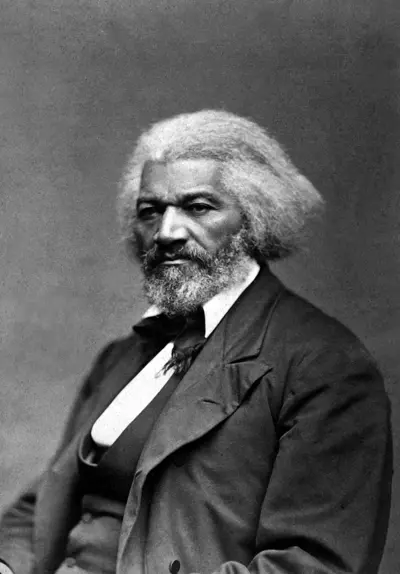
Frederick Douglass was an American social reformer, abolitionist, orator, writer, and statesman. After escaping from slavery in Maryland, he became a national leader of the abolitionist movement in Massachusetts and New York, becoming famous for his oratory and incisive antislavery writings. Accordingly, he was described by abolitionists in his time as a living counterexample to slaveholders' arguments that slaves lacked the intellectual capacity to function as independent American citizens. Likewise, Northerners at the time found it hard to believe that such a great orator had once been a slave.
