Eugene V. Debs Quotes
I am thinking this morning of the men in the mills and factories; I am thinking of the women who, for a paltry wage, are compelled to work out their lives; of the little children who, in this system, are robbed of their childhood, and in their early, tender years, are seized in the remorseless grasp of Mammon, and forced into the industrial dungeons, there to feed the machines while they themselves are being starved body and soul....
Debs had unconstitutionally been arrested and jailed for opposing American entry into World War I. He was later pardoned by President Warren G. Harding.
Eugene V. Debs, 1855-1926, Indiana State Legislator (Democrat), Socialist Party Presidential Candidate, Labor Union Leader, Founder of the First Industrial Union, The American Railway Union, Statement to the Court in his own defense, September 14, 1918
Sourced by: Eigen's Political and Historical Quotations


The coal miners’ strike had been going for 5 months. The major issue was the right to union recognition. The mine owners refused to do that and decided to take the strike. President Theodore Roosevelt mediated a settlement where the miners won more money but no union recognition. The great appeal and significance of this speech is that it stressed the young children who started working in the mines at ages 8 or 9 by working on the “breakers” where they broke up large chunks of coal into smaller chunks. The children never saw daylight and never had a chance for education much less a childhood. At the time, and well into the 20th century the Republican Party was adamantly opposed to any legislation regulating child labor and when two decades later public opinion finally forced Congress to pass Child Labor legislation, the Supreme Court declared it unconstitutional and it took a Constitutional Amendment. See {32240}, {642469}, and {36885}.


Sinclair had written an expose of the meat packing industry – the Jungle – which used as its setting the Armour meat packing factory. It changed the way the public thought about the industry, the role of government and regulation. President Roosevelt took up the reform role, and got Congress to Regulate the quality and cleanliness of the meat packing industry. Sinclair, however not only wanted that reform, but also wanted the labor wages and conditions reformed. He referred to the Armour plant as the fortress.

She was writing about the textile mills of Manchester, England in the Industrial Revolution. Workers’ wages were so low that many of them could not feed themselves and their family decently

Oastler was a mill owner himself.


Ten cents a day was a very low wage—it was about the equivalent of a meal at a tavern at the time. Workers throughout the country were outraged and give him a derogatory nickname—see Quotation 643585.


See Tom Steel {40547} for a summary of mine serfdom.

In his economic view, managers, accountants, attorneys, owners, shareholders, landlords, were all supported by the workers who have to support themselves and all the others.


3rd Earl Russell of Kingston

This report and others like it eventually led to French labor reforms, but only many years later.

Indian and Black slaves were outlawed very early in Connecticut, not on moral grounds of concern for the Indians and Blacks, but because of the negative effects on the white poor. Why would anyone pay the poor any more than the amortization costs of a slave? Therefore there was no way a poor white could make a living wage if slavery were to coexist.


Jefferson was one of the first political and economic thinkers to express concern over the “wage slave” concept of the industrial revolution. This was one of the major reasons that he was not in consonance with Alexander Hamilton in his economic vision for America. While we followed the Hamilton direction, there are still issues of maintaining freedom and independence for an employee in modern nations and economies.

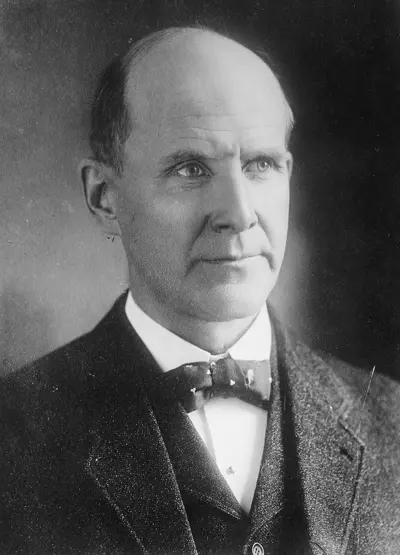
Eugene Victor "Gene" Debs was an American socialist, political activist, trade unionist, one of the founding members of the Industrial Workers of the World (IWW) ("Wobblies") and five times the candidate of the Socialist Party of America for President of the United States. Through his presidential candidacies as well as his work with labor movements, Debs eventually became one of the best-known socialists living in the United States.
