Elizabeth Gaskell Quotes
I am not given to Political Economy, but I can use my eyes. I have never seen the masters (mill owners) getting thin and haggard for want of food
She was writing about the textile mills of Manchester, England in the Industrial Revolution. Workers’ wages were so low that many of them could not feed themselves and their family decently
Elizabeth Gaskell, 1810-1865, British Writer, Mary Barton, 1847, .
Sourced by: Eigen's Political and Historical Quotations

Jefferson was one of the first political and economic thinkers to express concern over the “wage slave” concept of the industrial revolution. This was one of the major reasons that he was not in consonance with Alexander Hamilton in his economic vision for America. While we followed the Hamilton direction, there are still issues of maintaining freedom and independence for an employee in modern nations and economies.

We are still grappling with the distribution of wealth issue.

In his economic view, managers, accountants, attorneys, owners, shareholders, landlords, were all supported by the workers who have to support themselves and all the others.


While it was true that wages did not increase beyond inflation, the enormous increase in productivity—about a doubling—was not only due to the workers but was also due to the capital investment that the companies made in computers, robots, job restructuring, advanced training, and other management initiatives. Historically, when there are substantial productivity increases, the benefit is shared between the workers and the company as both were necessary to produce the increase in productivity. But since 1980, the workers have not obtained any significant share of the productivity increase.


Ten cents a day was a very low wage—it was about the equivalent of a meal at a tavern at the time. Workers throughout the country were outraged and give him a derogatory nickname—see Quotation 643585.
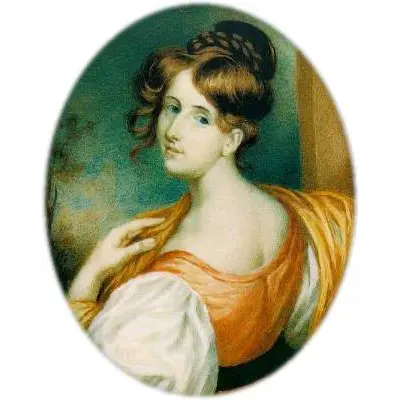
Elizabeth Cleghorn Gaskell, often referred to as Mrs Gaskell, was an English novelist, biographer and short story writer. Her novels offer a detailed portrait of the lives of many strata of Victorian society, including the very poor. Her work is of interest to social historians as well as readers of literature. Her first novel, Mary Barton, was published in 1848. Gaskell's The Life of Charlotte Brontë, published in 1857, was the first biography of Charlotte Brontë. In this biography, she wrote only of the moral, sophisticated things in Brontë’s life; the rest she left out, deciding that certain, more salacious aspects were better kept hidden. Among Gaskell's best known novels are Cranford (1851–53), North and South (1854–55), and Wives and Daughters (1865), each having been adapted for television by the BBC.
