Francois Rene de Chateaubriand Quotes
I am Bourbon as a matter of honor, royalist according to reason and conviction, and republican by taste and character.
Francois Rene de Chateaubriand, 1768-1848, French Minister of Foreign Affairs, "De la restauration et de la monarchie élective", 1831
Sourced by: Eigen's Political and Historical Quotations


He had been attacked by the extremists in his own party for serving as the Ambassador to China during a Democratic administration. Huntsman, fluent in Chinese and very familiar with Chinese culture, was a very successful Governor and was recognized by President Obama as being uniquely qualified and as a Patriot he made this great statement about service to country


The French Revolution was out of control and terribly bloody. Most Americans and even English who supported the principles and reasons for the French revolution ceased their support because of the Reign of Terror. Jefferson, however, saw a link between France and American democracy and was reluctant to end support.


Russell despised the Commission Chairman, Chief Justice Earl Warren and had refused to serve. Johnson changed Russell's mind. See Richard B. Russell.


Many Republicans in the early 21st century signed a “no new tax” pledge to Grover Norquist, a Republican Party Boss, which he kept in his personal safe. However, many criticized the practice in that the private party pledge could easily conflict with the Oath the legislators took to the Constitution.


He was a Republican who served a Democratic President to the distress of some of the extreme right wingers of the Republican Party.


Theodore Roosevelt was the Presidential nominee

In the election of 1800, the Jeffersonian republicans were pitted against the John Adams Federalists. The latter had seen the revolution as against the excesses of England and King George and not necessarily against the notion of a class society where government served the interests of the upper class—a political battle that is still with us to some extent. The Jewish religion generally recognizes no right of theocratic authority of one man over others with all to follow the laws of God, was theologically very republican. Rabbis were teachers and had no theological or civil authority. To Nones and many other Jews the Jeffersonian ideals were very close to their religious and cultural tradition and to the extent that there has been a party of the classes and a party of the masses, most Jews had gravitated to the latter with the exception of merchants, bankers and others whose economic interests were with the right of center party.
The motto was worn on their uniforms which unlike the blue of the rest of the American army was white as can be seen in the famous paining by muralist David R. Wagner. Rhode Island offered freedom to all slaves who would enlist. It not only included Negroes but Indian slaves as well. See {613949} and {614120} for details. The motto itself is interesting in that there was little concept of a country then as most Americans identified themselves as Virginians, New Yorkers or Rhode Islanders. There was no Constitution—only a confederation of States. But the former slaves joining the regiment had never voluntarily associated themselves with Rhode Island, and the first free decision they made was to join the regiment and have a new country.


Ataturk was one of the few revolutionary leaders who appreciated the importance of maintaining a Republic over time and allowed for the possibility that the revolutionary government might become corrupt. So like Thomas Jefferson, he always told citizens to be ever vigilant. In the case of Turkey, on several occasions fundamentalist religious forces have attempted to regain control of the secular republic and the government and mindful of Ataturk’s warnings the Army and other forces have rallied to keep Turkey independent and secular.
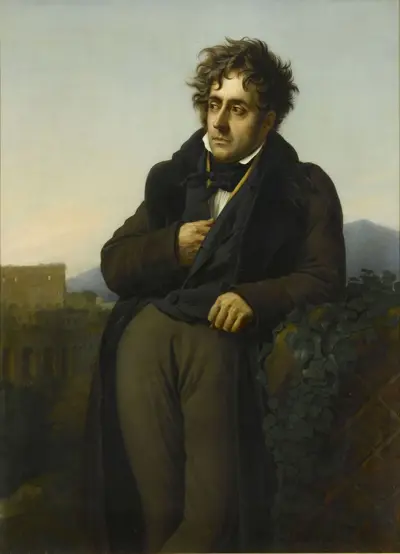
François-René, vicomte de Chateaubriand was a French writer, politician, diplomat and historian who had a notable influence on French literature of the nineteenth century. Descended from an old aristocratic family from Brittany, Chateaubriand was a royalist by political disposition. In an age when large numbers of intellectuals turned against the Church, he authored the Génie du christianisme in defense of the Catholic faith. His works include the autobiography Mémoires d'Outre-Tombe ("Memoirs from Beyond the Grave"), published posthumously in 1849–1850.
