Mahatma Gandhi Quotes
History is replete with instances of men, who, by dying with courage and compassion on their lips converted the hearts of their violent opponents.
Gandhi, Mahatma. The Collected Works of Mahatma Gandhi. Vol. 64, Publications Division, Ministry of Information and Broadcasting, Government of India, 1976, p. 321.


The Egyptian Muslim Brotherhood had won the first democratic election, but they proceeded to use their majority to deny rights to others. Massive demonstrations against the government, with the Egyptian military support deposed the Brotherhood President and government. The Brotherhood then took to the streets, demonstrating against the ousting of their elected government. After more than a week of constant demonstrations and the blockage of many streets, the new military appointed government authorized the police to clear the streets. Some of the Brotherhood were armed and killed over 40 police and several hundred demonstrators were also killed with each side blaming the other for “starting” the violence. The vice president was a strong opponent of the Muslim Brotherhood and supported and called for the ousting of their undemocratic, albeit elected, government. However he also supported their right to protest in the streets and condemned the use of force.


The African National Congress violent attack on apartheid in South Africa was amazing in the sense that with all the anger and the terrible behavior including murder and shooting of unarmed demonstrators, the ANC not only urged rejection of terrorism against civilians but managed to keep their followers under control. When apartheid finally fell and the ANC Black majority government came to power, the lack of retribution was not only a model of reconciliation for the world but maintained the best industrial economy in Africa.

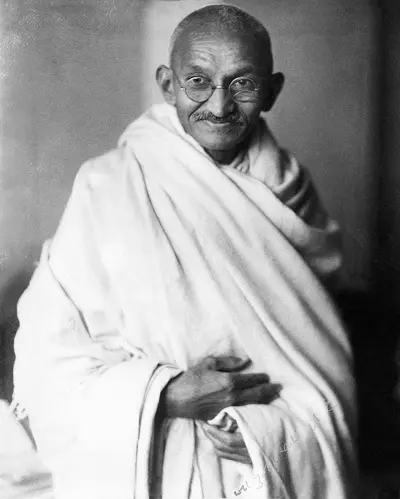
Mohandas Karamchand Gandhi was an Indian lawyer, anti-colonial nationalist, and political ethicist, who employed nonviolent resistance to lead the successful campaign for India's independence from British rule, and in turn inspired movements for civil rights and freedom across the world. The honorific Mahātmā (Sanskrit: "great-souled", "venerable"), first applied to him in 1914 in South Africa, is now used throughout the world.
