Book of Ecclesiastes Quotes
Happy are you, O land, when your king is a free man.
Old Testament, Ecclesiastes 10:17
Sourced by: Eigen's Political and Historical Quotations


This newspaper was an English language organ published by General Allenby’s British and Allied forces in the Middle East. Prior to the war, the Middle East was all part of the Ottoman Empire. However, the Ottoman Turks sided with Germany in WWI and their Middle East dominions were targets for the allied military strategy.


While this has been one of the great American principles of political philosophy, in reality we have on many occasions interfered when a people chose an enemy of the United States or made a choice of a government which would seize power and not allow any further free choices. However, from the time JFK made this statement to today, our foreign policy record has become much better on implementing this principle.

He was subpoenaed by the House Un-American Activities Committee where he was accused of being a Communist which he eloquently denied starting with this statement. He died of a heart attack 3 days later. However, most historians agree that White passed classified information to the Russians. He was accused of being a Communist, but there was never any evidence of that. Some people believe that he was a spy for the Russians and committed espionage, but others disagree observing that White was very much his own man and felt that much information that was classified never should have been. White substituted his own judgment, it is believed, about what could be given to the Russians for the security system. He was an admirer of what Russian socialism had accomplished economically, educationally and medically since the 1917 revolution deposing the Czar. Russia had been a valuable military ally, which had taken the brunt of both military and civilian casualties in WWII. White’s economics were certainly not Marxist but very much Keynesian.

Although Holland was more egalitarian and fairer than most nations of Europe, it was not quite as desirable as Diderot described it. He only visited a part of Holland that was the most educated and affluent.


Trumbo was morally opposed to war. He also refused to name Hollywood communists to Congressional Committees during the Red Scare. He was then blacklisted from his occupation, screen writing.

Actually originated by William Jennings Bryan in a 1900 campaign speech. See {640984} . The slogan became the name and first line of a poem and also a song. See {609937}

This quotation was paraphrased by the U. S. State Department when the President of Peru dismissed the congress in 1992.


Harding was arguing for party government. He may or may not have been right, but he was one of the weaker administers that held the American presidency. In addition he was not a particularly hard worker, and was more than willing to share any burdens.


The great irony was that under the British, government of India, including the Pakistan area was quite good. However, after independence, India developed democratic government and is improving its governance to where it is almost good government. Pakistan, in marked contrast, had a democracy when Independence was attained and quickly fell into one dictatorship after another. And none of the governments came close to being good Government. Pakistan has a very corrupt and incompetent government—both military and civilian. However, at the time this quotation was made, the leaders of Pakistan were hopeful about and committed to good and democratic government. But neither ever happened.

Crockett and a large group of Tenesseeans all died defending the Alamo for the Liberty and Independence from the Mexican Dictator, Santa Anna.


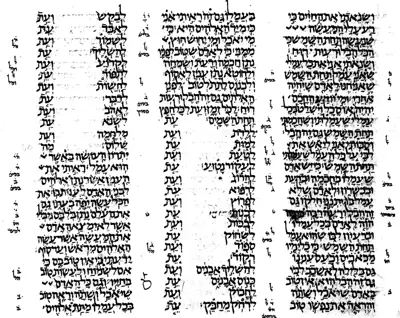
Ecclesiastes (/ɪˌkliːziˈæstiːz/; Hebrew: קֹהֶלֶת, qōheleṯ, Greek: Ἐκκλησιαστής, Ekklēsiastēs) written c. 450–200 BCE, is one of the Ketuvim ("Writings") of the Hebrew Bible and one of the "Wisdom" books of the Christian Old Testament. The title commonly used in English is a Latin transliteration of the Greek translation of the Hebrew word קֹהֶלֶת (Kohelet, Koheleth, Qoheleth or Qohelet). An unnamed author introduces "Kohelet" as the son of David (1:1) and does not use his own voice again until the final verses (12:9–14), where he gives his own thoughts and summarises the statements of "Kohelet"; the main body of the text is ascribed to Kohelet himself.
