Edwin Meese Quotes
Guns go boom. Explosives go boom. That seems to be the reason that the Bureau of Alcohol Tobacco and Firearms regulates both.
Edwin Meese, U. S. Attorney General (Republican), American Bar Association Forum of Former Attorneys General, C-SPAN, November 25, 1999
Sourced by: Eigen's Political and Historical Quotations

This quotation is often provided by historians studying the gun culture of America. Even conservatives like Ames did not see a gun or an armed citizenry as important to America’s survival or well being. Contrary to popular belief, even the State Militias’ whose rights to bear arms was written into the Second Amendment did not bother to do so. In 1803 only three state militias had rifle companies. Firearms of the time were expensive, difficult to maintain, and hard to use. Unless one needed them for defense, it was too much of a bother. Even in the aftermath of the War of 1812 only 30% of Massachusetts adult men owned guns; by 1839, the rate was below 10%. It was on the frontier where guns were popular and necessary. See {613080}.


He was unhappy about the fact that the Royal Canadian Mounted Police were still routinely carrying guns on duty. In England and Canada there has been a tradition of police officers on their beats being unarmed. When more force is needed special armed police are dispatched.


Gunsmiths were few in early America and a skilled gunsmith could only make about 3 per month. As a result guns in early America were a luxury and few Americans orned them. This is contrary to the myth that the early Americans were all gun owners and sharpshooters.

10 years later the Supreme Court ruled that such a prohibition would be unconstitutional.

Although written by a science fiction writer, this is one of the best quotations arguing for widespread gun ownership.


Thirty young black men and women carrying pistols, revolvers, and shotguns, appeared at the grand entrance of the California Capitol Building. The capital police stopped them and asked what they were going to do with their guns. Bobby Seal replied by asking the police officer what he was going to do with his gun. Seale and the Black Panthers then quoted the Second Amendment to the Constitution and insisted that they had a right to carry guns. Seale led his overtly armed followers inside while police and legislators looked on in horror. They were breaking no law. See the linked quote for Seale’s statement at Sacramento.


The National Rifle Association was Founded by men who were distressed that young men from the cities were so unskilled with firearms when the served in the Civil War that they thought that there should be an organization devoted to teaching the skilled use of firearms in case of another war. Frederick, the President, was himself a skilled marksman having won several of the shooting events in the Olympics. The officers and the organization in the early days and received free ammunition from the Federal Government with which to train and certify young men in shooting accuracy. The organization, alarmed at the high rage of gun accidents causing death and serious injury added gun safety to their program and this was followed by teaching and certifying Hunting Safety as well. Their vision was that marksmanship and safety through their courses and programs would be implemented by schools, camps, scouts, clubs and other intermediary organizations which were certified by the NRA.


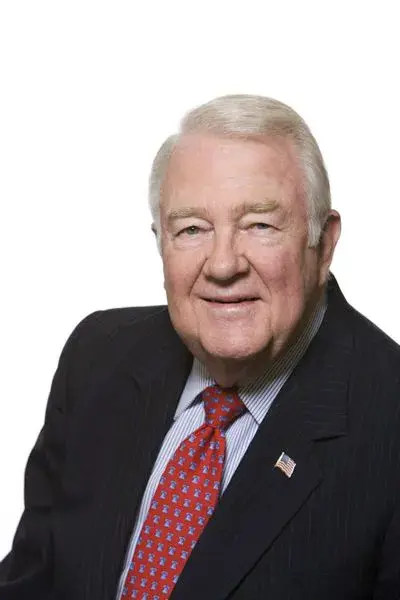
Edwin Meese III is an American attorney, law professor, author and member of the Republican Party who served in official capacities within the Ronald Reagan Gubernatorial Administration (1967–1974), the Reagan presidential transition team (1980–81) and the Reagan White House (1981–1985), eventually rising to hold the position of the 75th United States Attorney General (1985–1988), a position from which he resigned following the Wedtech scandal.
