Conrad Black Quotes
Gradually, between his 15th and 25th years, during the ascendancy of Theodore Roosevelt, Franklin began to persuade himself that he would become God’s chosen, and the American people’s constitutionally elected, instrument for the stewardship of the country.
Conrad Black, Canadian Newspaper Publisher, Franklin D. Roosevelt: Champion of Freedom, 2003
Sourced by: Eigen's Political and Historical Quotations

This quotation illustrates an interesting phenomenon in American Presidential Politics. There have been Democratic Presidents (FDR and Obama are the most glaring examples) for whom there was vituperative hatred and derision from the conservative Republicans who would frequently refer to them as Socialists and would believe that they were trying to lead the country on the path to socialism. The Presidents always stated that they were opposed to socialism, but to little avail with their conservative haters. But the socialists of the times and even the left wing of the Democratic Party not only did not see them as socialists, but were not very supportive or complementary of their skills and capabilities. Roosevelt reveled in the situation and “welcomed: their hate. Obama was more of a public centrist who tried to avoid the president getting involved in the extreme partisanship of the day.


Coughlin was an early and valued supporter of FDR, but after Roosevelt’s election the priest became dissatisfied that Roosevelt was not radical enough. FDR also wanted to distance himself from many of the Fascist and Socialist ideas of Coughlin and especially his racism and anti-Semitism. Coughlin then flip-flopped and became a vicious Roosevelt Critic. Few realize that he ever supported Roosevelt.


Before assuming the presidency in 1933, Franklin Delano Roosevelt and his wife called on President and Mrs. Hoover in the White House. Social custom required that the call be returned, but Roosevelt told the outgoing President, "I realize, Mr. President, that you are extremely busy, so I will understand if you do not return the call." Hoover responded:


The Ambassador was not on the best terms with FDR. He met with the Luces, key Republicans on Wendell Willkie's team regarding his delivery of the Catholic vote.


After JFK’s assassination, many of his appointees who were liberal Democrats, were concerned that LBJ was a Southern conservative and might not want to serve in a conservative administration. Johnson satisfied Heller and all of the other Kennedy appointees who he asked to stay on. Actually, Johnson was more liberal than JFK, and proved it during his Presidency.


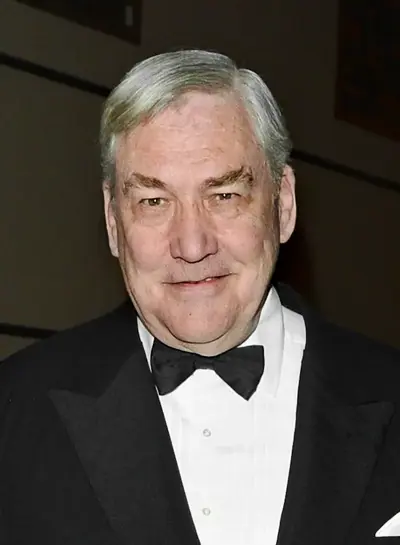
Conrad Moffat Black, Baron Black of Crossharbour, KCSG, is a Canadian-born British former newspaper publisher, convicted criminal, and writer. His father was businessman George Montegu Black II, who had significant holdings in Canadian manufacturing, retail and media businesses through part-ownership of the holding company Ravelston Corporation. In 1978, two years after their father's death, Conrad and his older brother Montegu took majority control of Ravelston. Over the next seven years, Conrad Black sold off most of their non-media holdings in order to focus on newspaper publishing. Black controlled Hollinger International, once the world's third-largest English-language newspaper empire, which published The Daily Telegraph (UK), Chicago Sun-Times (U.S.), The Jerusalem Post (Israel), National Post (Canada), and hundreds of community newspapers in North America, before controversy erupted over the sale of some of the company's assets.
