George Carlin Quotes
Government want to tell you things you can't say because they're against the law, or you can't say this because it's against a regulation, or here's something you can't say because its a... secret; "You can't tell him that because he's not cleared to know that." Government wants to control information and control language because that's the way you control thought, and basically that's the game they're in.
Carlin, George. When Will Jesus Bring the Pork Chops?. Hyperion, 2004.


This was a preliminary ruling after the State of Missouri filed a lawsuit against the Biden Administration over federal officials pressuring social-media companies to police online speech about certain topics. An “Orwellian 'Ministry of Truth'” refers to the concept presented in George Orwell's dystopian novel, '1984.' In the novel, the Ministry of Truth is a governmental institution responsible for altering historical records and disseminating propaganda to manipulate and control public perception.


For example, most of the documents that are classified as secret in the CIA are so classified because the censor thought the information might be damaging to the CIA’s interest, not the American citizen’s. However, there is a strange logic that is sometimes given to justify censoring material that would embarrass the agency: If the agency is embarrassed, public support and confidence in the agency will be eroded, and that in turn will cause investigations, reviews, and possible diminished budgets. This would be distracting from the agency’s mission of keeping Americans safe, so the public should be kept in the dark about embarrassing material.


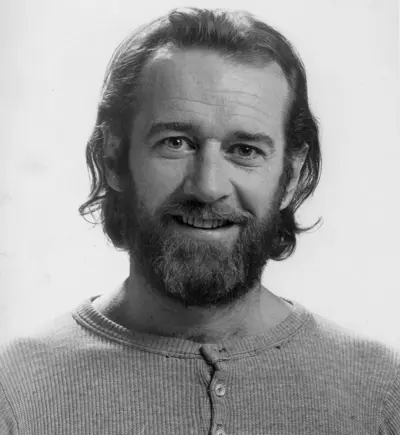
George Denis Patrick Carlin was an American stand-up comedian, actor, social critic, and author. Regarded as one of the most important and influential stand-up comics of all time, he was dubbed "the dean of counterculture comedians". He was known for his dark comedy and reflections on politics, the English language, psychology, religion, and taboo subjects. His "seven dirty words" routine was central to the 1978 United States Supreme Court case F.C.C. v. Pacifica Foundation, in which a 5–4 decision affirmed the government's power to censor indecent material on the public airwaves.
