Harry S. Truman Quotes
For reasons of national security and out of consideration for some people still alive I have omitted certain material. Some of this material cannot be made available for many years, perhaps for many generations.
Truman, Harry S. Memoirs by Harry S. Truman: Year of Decisions. Doubleday & Company, 1955, p. x.


The TPP was the first Trade Agreement that had ever been classified as “Secret” when it was being negotiated. This was one of the most hotly debated policies of the era. Even Congress could not get a look at what was being negotiated although the Senate would have to ratify it when finished for it to become effective. .On the surface, it is outrageous that a non-military or defense activity should be secret in a democracy. What could be wrong with the Congress and the public being aware of a trade negotiation while it was being formulated and negotiated? Kirk and other apologists for the secrecy policy argue that because of the trade-off relationships among different clauses and facets of a trade treaty, there are many proposals that are made just to initiate a bargaining position, and the negotiators themselves neither expect nor intend those proposals to be a part of the final treaty. To then have groups of Americans get upset and start a lobbying position against a treaty when what they object to is not ever going to be in the treaty poisons in the public mind the entire treaty which then could be killed for something that was never real to begin with. A similar thing happened with the Obamacare legislation. Congress drafted the various clauses and many were included as part of the bargaining process or misunderstood because of poor first drafting. Opposition to those clauses set a tone of animosity against the bill as a whole. After the bill was passed, the clauses that were most unpopular or misinterpreted were the main reason that citizens gave for opposing Obamacare even though they were not in the legislation. Advocates of secrecy point out that the original Constitutional Convention was entirely secret with all the delegates agreeing that if each and every proposal that was debated were public, there would develop so much opposition that the result could never be ratified later. Yet it is hard to argue against transparency of government processes in a democracy.

Arguably, in the intelligence world, most of the classified documents are not truthful because there are many different work products that are designed to obtain all points of view. There have been major areas were NONE of the documents on a subject were true as they were all based on faulty assumptions or ignoring critical information. None of the classified intelligence documents even hinted at the breakup of the Soviet Union for example. By number, most of the documents in the FBI secret files are raw intelligence reports and are full of unverified opinion—including biased and self-serving statements.


This radical reform did not make much headway. The “need to know" standard used specific knowledge to signify the status of different officials and was intended to minimize the likelihood of intelligence leaking as few people saw the whole picture and understood the implications. But that was the great weakness in that the major purpose of intelligence is to analyze the information and guide the nation’s policies and responses to events and situations. Without all the information available so many intelligence and other officials are unable to ‘connect the dots’ and see the picture emerging. The attack of September 11 was a classic example where much of the information that was known never was conveyed to most people and so no one had a big enough picture. By the time one could establish a ‘need to know’ it was too late to utilize the conclusions even if they were reached in time.

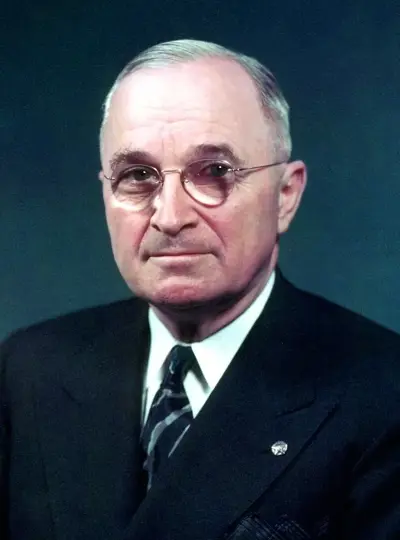
Harry S. Truman was an American politician who served as the 33rd President of the United States (1945–53). He served as a United States Senator from Missouri (1935–45) and briefly as Vice President (1945) before he succeeded to the presidency on April 12, 1945 upon the death of Franklin D. Roosevelt. He was president during the final months of World War II, and approved the plan to drop atomic bombs on Hiroshima and Nagasaki. Truman was elected in his own right in 1948. He presided over an uncertain domestic scene as America sought its path after the war and tensions with the Soviet Union increased, marking the start of the Cold War.
