Tim Weiner Quotes
For 13 years, from Nixon’s era to the dying days of the Cold War, every estimate of Soviet strategic forces overstated the rate at which Moscow was modernizing its weaponry.
Nixon, when he took office, berated the CIA Director in front of the entire National Security Staff for underestimating Soviet Military capability. His intense pressure caused the CIA to go through a period where they constantly overestimated Russian capability and intentions. They found that most politicians preferred a serious threat rather than be accused of spending so much of the government’s budget—roughly half—for Defense.
Tim Weiner, Intelligence Historian, Legacy of Ashes: The History of the CIA, 2007
Sourced by: Eigen's Political and Historical Quotations


3 days later, President Truman, announced that the Russians had successfully developed an atomic weapon. This quotation gives us another example where the Central Intelligence Agency failed to predict and/or warn America about a crucial event. Others included the North Korean invasion of South Korea, the Arab Spring, the Soviet invasion of Afghanistan, the fall of the Berlin wall, and the collapse of the Soviet Union.
This was one of the great blunders of the Central Intelligence Agency in American History. As the Central Intelligence Agency was writing this report the Russians were landing missile components in Cuba. Within days the Cuban Missile Crisis would erupt. The Central Intelligence Agency also missed the Communist Takeover in China, the fall of the Berlin wall, the implosion of the Soviet Union, the Hungarian Revolution, the Iran Revolution, the Russian invasion of Afghanistan, and the Arab Spring just to list a few of the most dramatic events about which they failed to have any information in advance. At the same time they claimed that there were nuclear weapons in Iraq leading to the Iraq war and claimed the Soviets were on a track to have a better military and stronger economy—see {635791}.
Only three days later the Russians detonated their first atomic device.


The U. S. Counterintelligence team identified several KGB agents who were stealing American technology in various forms. Gus W. Weiss of the National Security Staff devised a plan where instead of arresting the Russian agents, FBI agents posed as mid-level science and technology workers who could be bribed to turn over American technology. Then they provided technology that did not work which the Soviets then proceeded to engineer and fabricate the techniques which never worked correctly. By the time the Russians found out they had wasted much effort and money at spying and engineering.

The alternative deterrent was to maintain an army of over 2 million men overseas in both Europe and Asia, and the cost was much greater than the then perceived cost of nuclear weapons. At the time no one figured the cost of coping with the radioactive material and waste as well as the cleanup of nuclear bomb factories like Hanford. These costs were still not known byt the 21st century.

This prediction was sadly terribly accurate. Nuclear terrorism is a realistic threat at the millennium. Pannekoek was one of the first to predict it.


Kennedy was then a Senator with an eye on the White House. No such missile gap existed, and when Kennedy was elected President, he had the problem of public expectation for a problem which did njot exist, but he had been instrumental in creating.
Dr. Snyder was the youngest physicist at Los Alamos working on the Atom Bomb Manhattan Project. His rocketry skill was used to fire probes into the highly radioactive area to obtain samples and measurements immediately after the test bomb was exploded.

This was an amazing prediction for the time. Most Europeans were not sure that the United States would even survive, and Russia was looked upon as the most backward nation in Europe. By the middle of the 20th century—over 100 years after Tocqueville wrote this—The United States and Russia were the two superpowers of the world.

Russia then had designs on Afghani Territory. About a century later, Russia Invaded Afghanistan and tried to impose a communist government. It failed and the Afghans drove out the Russians.

At the time the USSR was our ally. Neither the military or the state department focused in gaining intelligence on any ally and J. Edgar Hoover had for years focused on intelligence about communists in the United States but not in Russia and the rest of the world. These other agencies treated Souers with disdain or ignored him, but this memo showed the importance of Truman’s idea of having an independent intelligence agency to inform the President.


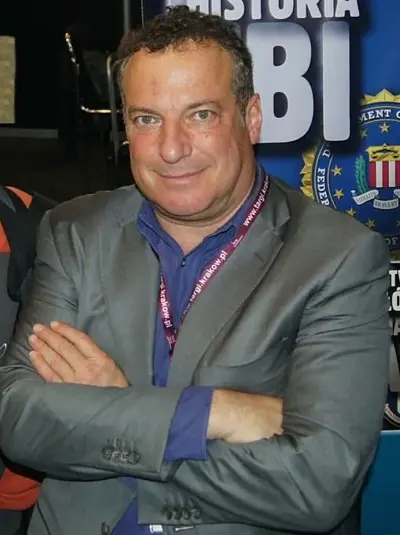
Tim Weiner is an American reporter and author. He is the author of five books and co-author of a sixth, and winner of the Pulitzer Prize and National Book Award. His newest book is The Folly and the Glory: America, Russia, and Political Warfare, 1945–2020
