Herbert Brownell Quotes
Executive Privilege
Herbert Brownell, U. S. Attorney General (Republican), Term devised by the Attorney General to wall off the personal discussions and meetings of President Eisenhower from the excesses of Senator Joseph R. McCarthy, Quoted by Arthur M. Schlesinger, Jr., C-SPAN Access to Presidential Archives, April 10, 2002
Sourced by: Eigen's Political and Historical Quotations

This is a great example of Presidential stonewalling of Congress. The legislative branch is often exercising its oversight role and demanding executive department documents which for various reasons the President does not want the Congress to see. In this case, almost all attorneys would have said that the Congress was entitled to see the documents. This set a precedent of de facto Executive Privilege for war time. However, Congress very often has used their power of demanding documents for political and ideological reasons and not for the better functioning of the government. In the Eisenhower administration the concept of Executive Privilege was formalized to protect President Eisenhower and officials in the Executive Branch from the abuses and excesses of Joseph P. McCarthy who was a fanatic, ideologue and an alcoholic at the same time. See {595900}.


Alberto Gonzalez, White House Counsel and later Attorney General who was forced to resign and David S. Addington, Counsel to the Vice President, had come up with a novel view of the powers of the presidency. They argued that since the President is the Commander in Chief, in a war situation or intelligence gathering thereto, has the Constitutional responsibility for that function, he need not obey any laws of Congress as in the conduct of the war Congress would be impinging on the Constitutional separation of powers which itself was prohibited by the Constitution. The argument did not find any significant legal support but for a while the George W. Bush White House behaved as if this were the law, despite the fact that even in the American Revolution and the War of 1812 Congress passed laws regulating the conduct of the armed forces as is provided for in other parts of the Constitution. Yet even Goldsmith would allow the President some powers that many think are unconstitutional and/or belong to Congress. See {32436}.


The President had authorized the NSA to spy Americans who might have been suspected of being themselves or being in contact with terrorists without obtaining permission of a court including the Foreign Intelligence Surveillance Act (FISA) special court that had been established for these cases. Instead the administration argues that it was inherent in the powers of the Presidency in time of war.


President George Washington dispatched David Humphreys on a secret mission to establish a diplomatic mission in Lisbon. To maintain the secrecy, he did not ask the Senate to confirm the appointment in advance.


President George W. Bush had ignored a federal law and tapped the phones of Americans without probable cause and a warrant issued by a court. The President’s defenders argued that the President, as Commander in Chief, has the Constitutional responsibility to lead the military and protect the nation. Intelligence gathering is part of military activity. Therefore the intelligence gathering is a Constitutional duty and the Congress, under the separation of powers doctrine, may not interfere with the President’s Constitutional Duty to conduct intelligence. Under this doctrine, the President need not obey laws that he believes impinge on his management of the war effort and the defense of the nation. Most legal scholars believe that this argument is nonsense, but the George W. Bush administration has stated the doctrine and it was the subject of much litigation.


See {635809} for an additional view on this act.
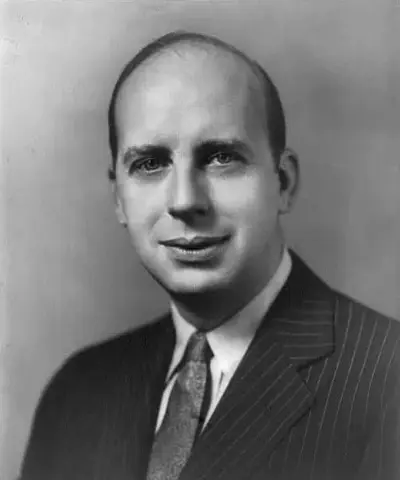
- Born: February 20, 1904
- Died: May 1, 1996
- Nationality:
- Profession:
Herbert Brownell Jr. was an American lawyer and Republican politician. From 1953 to 1957, he served as United States Attorney General in the administration of President Dwight D. Eisenhower.
