Walter Dellinger Quotes
There are circumstances where the President could fail to follow the will of Congress when doing so would interfere with the core of his responsibilities.
Walter Dellinger, Solicitor General, Testimony, House Judiciary Committee Hearing, July 17, 2008
Sourced by: Eigen's Political and Historical Quotations


President George W. Bush had ordered NSA agents to bug the phones and email of American citizens who might have been talking with an overseas party or e-mailing them out of the country. The administration thought that American citizens might be part of terrorist sleeper cells or unwittingly were aiding terrorists. The law prohibited such activity—where American citizens were involved—without getting a court order. However, the President claimed that he had the inherent power as commander in chief of exempting the court requirement. Others maintained that even the President is not above the law. What was the big puzzle was that there was a secret court Congress had established just for such cases, but the administration instead decided to bypass the court.


This concept of Presidential powers greatly expanded the traditional power of the Presidency. To one degree or another this became the view of every president who followed until George W. Bush who went one large step further. He maintained that the President could do that which was specifically prohibited by law if the purpose was to perform a Constitutional duty.


This was the President’s original role regarding legislation. However, in the 20th century, Presidents have become more active and suggest laws and often initiate the process and then end it by signing the law that he suggested and shepherded through the Congress. But this was never the vision of the Founding Fathers, but since it is not addressed in the Constitution is not an unconstitutional process.


The President had authorized the NSA to spy Americans who might have been suspected of being themselves or being in contact with terrorists without obtaining permission of a court including the Foreign Intelligence Surveillance Act (FISA) special court that had been established for these cases. Instead the administration argues that it was inherent in the powers of the Presidency in time of war.

President Abraham Lincoln had pocket vetoed his own party's reconstruction bill in the midst of an election year.


Alberto Gonzalez, White House Counsel and later Attorney General who was forced to resign and David S. Addington, Counsel to the Vice President, had come up with a novel view of the powers of the presidency. They argued that since the President is the Commander in Chief, in a war situation or intelligence gathering thereto, has the Constitutional responsibility for that function, he need not obey any laws of Congress as in the conduct of the war Congress would be impinging on the Constitutional separation of powers which itself was prohibited by the Constitution. The argument did not find any significant legal support but for a while the George W. Bush White House behaved as if this were the law, despite the fact that even in the American Revolution and the War of 1812 Congress passed laws regulating the conduct of the armed forces as is provided for in other parts of the Constitution. Yet even Goldsmith would allow the President some powers that many think are unconstitutional and/or belong to Congress. See {32436}.


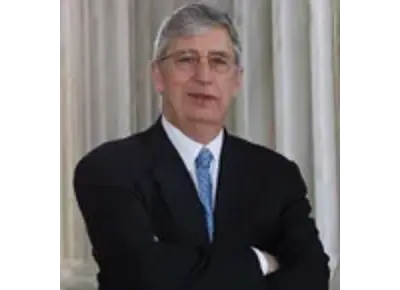
Walter Estes Dellinger III is the Douglas B. Maggs Professor of Law at Duke University School of Law and head of the appellate practice at O'Melveny & Myers in Washington, D.C. He also currently leads Harvard Law School's Supreme Court and Appellate Litigation Clinic. He served as the acting United States Solicitor General for the 1996-1997 Term of the Supreme Court. Prior to his appointment as acting Solicitor General, Dellinger was an Assistant Attorney General and head of the Office of Legal Counsel under President Bill Clinton. He has also appeared as a commentator on This Week, the ABC News Sunday morning program hosted by George Stephanopoulos. Dellinger is a graduate of the University of North Carolina at Chapel Hill and Yale Law School.
