Woodrow Wilson Quotes
Excesses accomplish nothing. Disorder immediately defeats itself.


1st Earl Lloyd-George of Dwyfor. England had occupied Iraq, expecting to be welcomed by the natives, but like the George W. Bush ill-fated invasion almost a century afterward calls for withdrawal were met by the same rationale for maintaining the occupation. The English policy makers like the Bush administration were expecting a more welcoming reaction. See {585250}.

As the U. S. entered Baghdad during the Iraq War, the Information Minister continued to deny American success. This quotation illustrates a common Arab custom of greatly exaggerating military successes and grossly minimizing failures. Often, this would be done despite the fact that the people he was addressing knew full well that he was not being accurate. Every nation in military conflict tends to make minor adjustments with reality for propaganda purposes, but the Arab culture seems to do this to an extreme. In the 6 day war, the official Egyptian announcements said that they had destroyed much of the Israeli air force, at the same time that they were begging the United Nations to impose a cease fire and the Egyptians really knew that their entire air force had been destroyed and there were virtually no Israeli air losses. They also realized the world would know the truth in a day or so, yet they persisted in the absurd lie. Some scholars argue that for the Arab Culture oratory and language is poetry and describes hopes and ideals and not reality if it is unpleasant, but this theory is not universally accepted.


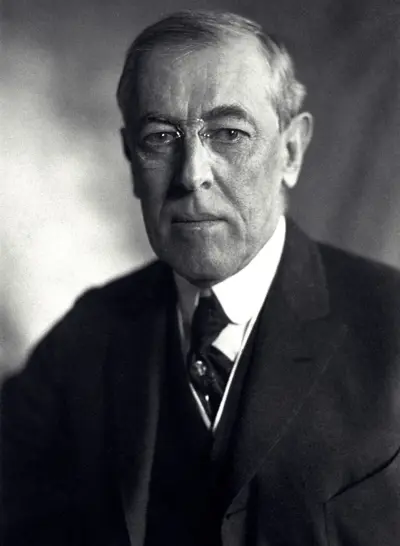
Thomas Woodrow Wilson was an American politician and academic who served as the 28th president of the United States from 1913 to 1921. A member of the Democratic Party, Wilson served as the president of Princeton University and as the 34th governor of New Jersey before winning the 1912 presidential election. As President, Wilson led the United States into World War I in 1917. He was the leading architect of the League of Nations, and his progressive stance on foreign policy came to be known as Wilsonianism. Scholars have generally ranked Wilson in the upper tier of U.S presidents, although he has been criticized for supporting racial segregation and white supremacy.
