Jimmy Carter Quotes
Everybody always wants more staff. That’s why the federal government gets so overloaded.
The President wanted the White House slimmed as an example and reduced the First Lady’s staff markedly. Roslyn Carters response was, “But I’m not everybody!” She didn’t get her staff increase.
Jimmy Carter, 39th President of the United States (Democrat, GA), Response to hi wife who wanted the same size staff as her predecessor, Betty Ford
Sourced by: Eigen's Political and Historical Quotations


Jefferson is the hero of the “small government” enthusiasts of modern times. In his day it was the conservative Federalists who wanted a larger government while the Jeffersonians, the radicals of the day argued for smaller government. Jefferson not only favored smaller government, but he actually cut the size of the Federal workforce something which in modern times no president has done except for William Clinton.


Many politicians had been complaining that the CDC and NIH had not trained more community hospital staffs in infectious disease protection techniques when the Ebola problem came to America. However, the budgets for these kinds of activities had been cut back each of the recent previous years. Lee made the assumption that Congress wanted government to work. In actuality there was a strong core of legislators in that Congress, who wanted government to fail so that citizens would tire of spending money on failures and thereby shrink the size of government. The members of Congress who wanted government to be effective however at that time had other more dramatic uses of money that training and capacity building of local hospitals.

1st Viscount Snowden


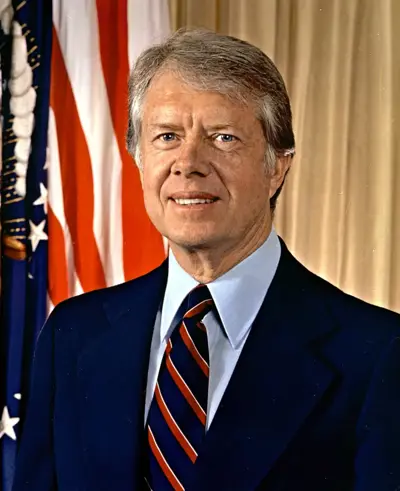
James Earl Carter Jr. is an American politician, businessman, and philanthropist who served as the 39th president of the United States from 1977 to 1981. A member of the Democratic Party, he previously served as a Georgia State Senator from 1963 to 1967 and as the 76th governor of Georgia from 1971 to 1975. Since leaving the presidency, Carter has remained engaged in political and social projects as a private citizen. In 2002, he was awarded the Nobel Peace Prize for his work in co-founding the Carter Center.
