Adam Smith Quotes
Every tax ought to be levied at the time, or in the manner, in which it is most likely to be convenient for the contributor to pay it.
Adam Smith, 1723-1790, Scottish Political Economist, The Wealth of Nations, 1776
Sourced by: Eigen's Political and Historical Quotations


There are many who would disagree with Presti’s description, while many others have this as a chief complaint. The agency tends to change from administration to administration as to its policies and collection methods. In the decades since this criticism, the agency has changed a good deal. However, there are great differences between IRS practices in different parts of the country, some of which are better than the others. One of the major problems of the IRS is the conflict between collecting taxes that should have been paid and were not and ruining the business or individual that committed the offense by taking current working capital. Congress has NEVER weighed in on this question preferring to let the Civil Servants take the heat.


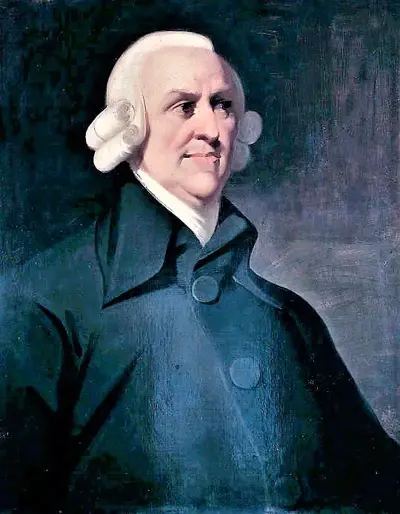
Adam Smith FRSA was a Scottish economist, philosopher as well as a moral philosopher, a pioneer of political economy, and a key figure during the Scottish Enlightenment, also known as ''The Father of Economics'' or ''The Father of Capitalism''. Smith wrote two classic works, The Theory of Moral Sentiments (1759) and An Inquiry into the Nature and Causes of the Wealth of Nations (1776). The latter, often abbreviated as The Wealth of Nations, is considered his magnum opus and the first modern work of economics. In his work, Adam Smith introduced his theory of absolute advantage.
