Edward III Quotes
Every man and woman of our kingdom of England, of whatever condition, whether bond or free, who is able bodied and below the age of sixty years, not living from trade nor carrying on a fixed craft, nor having of his own the means of living, or land of his own with regard to the cultivation of which he might occupy himself, and not serving another, if he, considering his station, be sought after to serve in a suitable service, he shall be bound to serve him who has seen fit so to seek after him; and he shall take only the wages liveries, meed or salary which, in the places where he sought to serve, were accustomed to be paid in the twentieth year of our reign of England
This is one of the favorite quotations of students of labor relations. The Black Plague, which raged in Europe from 1347 to 1349, had left relatively few able bodied people alive. Given this shortage of labor, the price that workers could command rapidly increased. The wealthy were outraged that the law of supply and demand and the marketplace produced such a labor inflations and the king then passed this draconian decree that in effect was one of the early attempts at wage control. It went further in that the workers were required to work for the official wages and had no choice of not working at all. In effect, labor was drafted. See {611124} and {611126}
Edward III, 1312-1377, English King, The Statute of Laborers; 1351
Sourced by: Eigen's Political and Historical Quotations

The Black Plague, which raged in Europe from 1347 to 1349, had left relatively few able bodied people alive. Given this shortage of labor there was a rapid inflation, especially to the distress of the landed class who had to pay much more for their food. The king therefore established what amounted to price controls, wage controls and forces labor. See {611125} and {611126}
The Black Plague, which raged in Europe from 1347 to 1349, had left relatively few able bodied people alive. Given this shortage of labor, even the beggars were forced to work in this form of “workfare”, thus outlawing private charity and welfare. See {611124} and {611125}


Jefferson was one of the first political and economic thinkers to express concern over the “wage slave” concept of the industrial revolution. This was one of the major reasons that he was not in consonance with Alexander Hamilton in his economic vision for America. While we followed the Hamilton direction, there are still issues of maintaining freedom and independence for an employee in modern nations and economies.

Workhouses were factories using unskilled or semiskilled labor established by the government to employ poor people constructively. The problems caused by these were many. The government workhouses competed with private factories, and generally taught no skills so that a poor person could ever escape poverty. Opponents of big government complained that the government was adding millions more people to its employment roles. Conservatives have liked the idea of requiring work for welfare benefits wherever possible, but they do not care for the other problems. America instead has workfare where welfare recipients must work where possible but they work for private firms. This tends to break down when there are no or few priate jobs available as in a recession. The belief that welfare will erode the quality of the work force in general, has proved to be a false notion, but it was widely held in 17th century England and is still held by some people. The problem of work and welfare is a very complicated one.


This was an accurate description of a capitalistic market with little understanding of the economic principles involved.
The government had proposed extending public education beyond age 14, the age at which British business felt that extending public education beyond age 14 would divert too much of the labor force away from work and have a negative effect on the economy. Of course upper class youth stayed in private (called “public” in England) school way beyond age 14. See {46077} for a rebuttal by one of the British economists of the day.
A wealthy nobleman, her father was accused of not being in touch with the common man.


This was a very creative solution to the problem of slavery. Slave holders and their supports have always claimed that the paid valuable money to acquire a slave and slaves were valuable personal property. Freeing slaves was the government confiscating their wealth. The Pennsylvania solution was to say that the labor of a slave for 7 years was worth far more than the cost of a slave, so that under this law, slave owners could get their monetary value back and make a modest profit, and slavery would gradually disappear over a 7 year period if no new slavery were allowed. Although it made a lot of sense, the Southern States felt that their economy was different—that they could never get free white men to pick cotton.
This was written under the name of Ragnar Redbeard. There are a few scholars who believe that it was written by Jack London, but most credit Desmond.

The spelling was the original the in legislation passed by the Virginia Assembly Gunsmiths were ery few at the time. The South Carolina Province had only as single gunsmith and he was not very skilled. Planting tobacco was a much more lucrative endeavour, so many of the few gunsmiths abandned that trade for tobacco farming.


Description of pre Industrial Revolution wage controls. Generally, they were quite popular with employees and employers alike. There was also a great deal of price fixing. These produced stability whenever weather of disease affected the labor force and eliminated continuous labor/management strife whenever conditions changed. There were no unions or other labor organizations and the Justice of the Peace was the de facto arbitrator of a compulsory arbitration. There was also a perception of fairness and not just economic power determining decisions. With the industrial revolution, the number of different jobs and skills exploded and the old system was no longer practical. This started hundreds of years of labor / management approaches with none yet considered ideal. This is another example of how modernization brings additional problems along with the great benefits by which all of us are healthier, wealthier, better educated, have more leisure time, more freedom and control over our own lives.

1st Viscount Milner. As bad as any colonialism was, compare this to the German approach to native labor {77560}.

This was one of the perceived advantages of the South—that the North, with its more complex and sophisticated society, would pay a higher economic price by fighting than the South would. Southern whites didn’t work or farm much and they could fight and the older men and slaves could keep the agriculture and economy going. However, the huge superiority of the North in productivity and technology, in farming, manufacturing, transportation and military offset the Southern advantage do a great degree. But when the North attracted so many of the Southern Negro slaves to their lines, the Southern labor force was diminished greatly for the first time. And Sherman’s March showed how the entire Southern economy could be crippled and the war was strategically lost by the Confederates. The reality of superiority of the North and the attitude of elites like Emerson in freely discussing that fact, was resented by Southerners then and since. There is to this day a Southern resentment of intellectuals and highly educated people—a vestige of the reality of differences existing in the 1860s and since. It was not until the 1950s that the South started developing educational and cultural institutions and populace that is on a par with the rest of the nation. But the states which spend less per capita on educational and cultural institutions, tend to have the poorest educational attainments of their citizens and they are mostly states of the deep South where values are still somewhat different from the North.


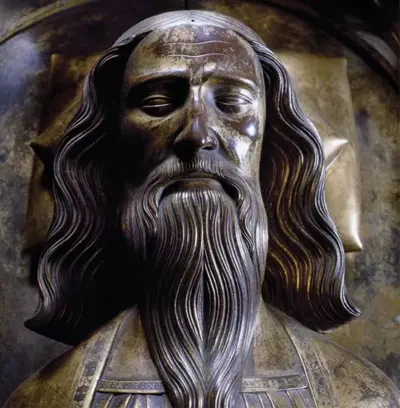
- Born: November 13, 1312
- Died: June 21, 1377
- Nationality:
- Profession:
Edward III, also known as Edward of Windsor before his accession, was King of England and Lord of Ireland from January 1327 until his death in 1377. He is noted for his military success and for restoring royal authority after the disastrous and unorthodox reign of his father, Edward II. Edward III transformed the Kingdom of England into one of the most formidable military powers in Europe. His fifty-year reign was the second-longest in medieval English history, and saw vital developments in legislation and government, in particular the evolution of the English Parliament, as well as the ravages of the Black Death. He outlived his eldest son, Edward the Black Prince, and the throne passed to his grandson, Richard II.
