Arnold J. Toynbee Quotes
… the struggle of men to outvie one another in production is beneficial to the community; their struggle over the division of the joint produce is not. The stronger side will dictate its own terms; and as a matter of fact, in the early days of competition, the capitalists used all their power to oppress the laborers, and drove down wages to starvation point. This kind of competition has to be checked; there is no historical instance of its having lasted long without being modified either by combination or legislation, or both. In England both remedies are in operation, the former through Trades Unions, the latter through factory legislation.
Arnold J. Toynbee, 1852-1883, English Economic Historian & Reformer, Uncle of Historian Arnold J. Toynbee, Lectures on The Industrial Revolution in England, 1884
Sourced by: Eigen's Political and Historical Quotations


Jefferson was one of the first political and economic thinkers to express concern over the “wage slave” concept of the industrial revolution. This was one of the major reasons that he was not in consonance with Alexander Hamilton in his economic vision for America. While we followed the Hamilton direction, there are still issues of maintaining freedom and independence for an employee in modern nations and economies.

The factory workers in Lynn, Massachusetts started their own newspaper: This was published four years before Marx and Engles published the Communist Manifesto

At the time, it did seem impossible that labor and capital would ever have harmonious relations. But the notion that slavery would solve the problem is as preposterous as anything ever entered into the American political dialogue. But there were many in the South, and some in the North, who actually believed it. Even 150 years later, while labor and capital relations were much better than pre Civil War, they still could not be described as “harmonious” or “friendly”.

At the time, industrialists could not even conceive of the notion of negotiating over wages must less collective bargaining.


We are still grappling with the distribution of wealth issue.


Roosevelt shocked the conservative members of his own party with this statement. Labor unions were not then an accepted concept in American society. Anti trust legislation and enforcement was in its infancy and companies in an industry commonly conspired as to price fixing, labor negotiations and market share allocations. TR had a scrupulous sense of fairness and equity.

At the time, the NYC subway was operated by a private companies. Quill worked for the largest, the Interboro Rapid Transit Company. Quill organized the workers and forced major changes in the system.
While Ray was very sympathetic towards the strike, his father’s attitude was typical of that of business men across the nation. A picket line or demonstration was a “mob” and mobs should be broken up before they do physical damage to people or property. “Grape” and “canister” were types of ammunition for cannon that was used against personnel in war. One shell could kill 20-30 men in a crowd.

He had squads of thugs that he would “rent” out to other gangsters for their enforcement activities and to unions to protect themselves from goons and intimidate non union workers. However, he would not let his men work as goons and strike busters or for companies—despite huge pay offers—to keep their workers in line, a common practice at the time.


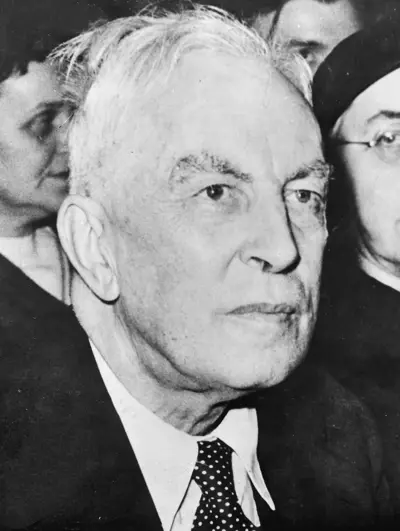
Arnold Joseph Toynbee CH FBA was a British historian, a philosopher of history, an author of numerous books and a research professor of international history at the London School of Economics and King's College London. From 1918 to 1950, Toynbee was considered a leading specialist on international affairs.
