Henry Louis Gates Jr. Quotes
Ending the slave trade was contrary to British economic interests. For all its limitations and hypocrisies - British slavery itself, of course, still continued to exist - I still think it was a great moment in human history.
Gates, Henry Louis, Jr. The African Americans: Many Rivers to Cross. PBS, 2013.


The issue of slavery which had been suppressed in Congress for the first decades of the nation broke out when Missouri was considered for statehood. By previous agreement, slavery was not even discussed in Congress but the time period elapsed. Tallmadge not only proposed that no more slaves could come into Missouri but most shocking to the Southerners was that every person born in the new state would be free at the age of 25. In a generation, there would be no more slavery in Missouri and there would be no economic compensation for slave owners at all. The House of Representatives accepted the amendment, but it failed in the Senate. At that time, Senators were not elected by voters but were appointed by the state legislators and the Southern slave states had a disproportionate share of the senate from a population point of view. But what this quotation shows clearly that a majority of the country in 1819 were opposed to slavery and were willing to end it without compensation.


Van Buren was Ambassador to England at the time.

Even before we had a Constitution there was major opposition to slavery. The “price” of the American Union was the acceptance of the slavery of the South. But the hypocrisy of a country based on liberty to allow and enforce slavery was not lost on the founding fathers. Ironically the abolitionists among the founding fathers were certain that they could persuade the Southern slaveholders of the error of slavery in a few years and things would be set right in the land. Even George Washington {630626}, and Thomas Jefferson and some other slaveowners at the time wished to see its abolition. Slaveholding Southern Founding Fathers in general were so wary of the abolitionists that they achieved structural, disproportionate, power in the new Constitution to ward off the abolitionists attempts to reform slavery.

America’s first political economist


Ireland, a part of the British Empire, and ruled by the English monarch, had many who celebrated the French Revolution, even as the English Royalists, looked upon France in horror. What is interesting is that the Irish newspaper could actually publish opinions like this which could be argued were treasonous.


Washington was from Virginia, the largest of the slave states, and he himself owned slaves. In his will he emancipated all his slaves. Most of his fellow Southern Slave owners however not only disagreed about the abolition of slavery but were adamant that slavery spread so that the abolitionists never attain a majority.

Earlier {629154} Smith was much more sympathetic with slavery. His views evolved as you can see by the comparison. He stated that he had a vision and made two prophesies {629156} that indeed came true. The last idea of slave buyouts seemed plausible to many abolitionists initially when they were not really knowledgeable about the economics of slavery. However, once they studied it, it became clear what it would not work even if the Southerners would then be willing to accept Blacks as free laborers which most were not, The two biggest problems were: 1) the international slave trade had been abolished. The only source of new slaves for growth was breeding them. Therefore, having slaves had TWO economic values—the work that they could do and the reproduction of themselves. A critical mass of owned slaves produced an income forever. And for Southerners who were culturally adverse to work (see {629169}), just having cash for their slaves was not enough. They were the servants, the farm labor, and their recreational sex. 2) and most important, the value or the slaves of the South was greater than the economic value of all the land, all the farms, all the buildings, all the factories, and all the inventory of the stores of the South all put together. The Southern slaves were the majority of the wealth of the south. There was no asset that could ever produce enough value to pay for the slaves—even over time. It would be like trying to buy all the shares of all the corporations in America today. There is no asset big enough to raise the money to ever finance it. The idea may have worked in Colonial America or even prior to the outlaw of the international slave trade, but by the time anyone took the idea seriously it was economically no longer feasible.

He is often referred to as “of Lahore.” He was a much better theologian than a historian. His credit of Islam with the principles that would end slavery, ignored the fact that just as American founding fathers espoused equality and freedom yet some owned slaves, likewise Mohammed, the founder of Islam, was a slaveholder. Historically, long after most of the world had abolished slavery, it still existed in the Islamic nations. They were forced out of the African slave trade by the European powers in the 19th century. But slavery was legal in Saudi Arabia as late as the 1960s. Slavery was still practiced in Sudan in 2005 with Muslims attacking Christians and Animists and taking them as slaves despite the official laws banning such practices. The government itself aided the slavers. Also, although Islam is credited with a major assault on slavery, it was not slavery per se that Muhammad banned. It was the slavery of another Muslim. Sharia and the Koran allows slavery so long as the slave is an unbeliever.


This was written from Washington DC where slavery was legal at the time.

The “rupture and revolution” was Southern secession and the Civil War. This quotation is very important because it so clearly states the cause of the Civil War—the threat of the abolition or change of the institution of slavery. During the late 19th century and the first half of the 20th, many historical revisionists—in an effort to promote national unity—began stating and teaching that the cause of the rebellion was a philosophical difference over State’s rights and not something so banal as the greed for and immorality of the benefits of slavery. See {621370} for another Southern quotation illustrating this point.
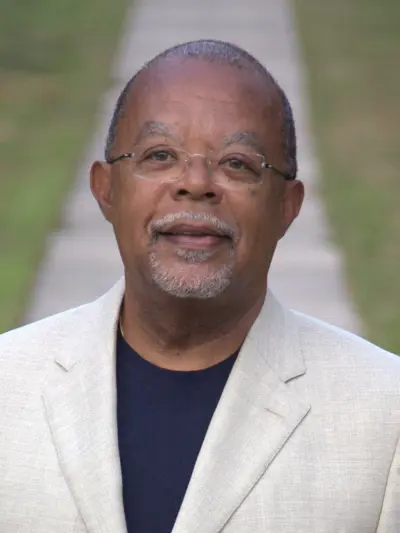
Henry Louis "Skip" Gates Jr. is an American literary critic, professor, historian, filmmaker, and public intellectual who serves as the Alphonse Fletcher University Professor and Director of the Hutchins Center for African and African American Research at Harvard University. He rediscovered the earliest African-American novels, long forgotten, and has published extensively on appreciating African-American literature as part of the Western canon.
