Thomas Pogge Quotes
Each powerful player, or coalition of players, will make concessions in areas where it has relatively less at stake in exchange for other such players making reciprocal concessions in other areas where it has relatively more at stake. Such trades are collectively rational insofar as they get each of the powerful players more of what it wants. But such trades are also dangerous because the whole international rule-system will become incoherent and therefore vulnerable to crises that will continue to become increasingly severe.
Pogge, Thomas. "Interview with Thomas Pogge." The Straddler, 2011.


[During the 18th, 19th and 20th centuries China had no significant impact on International trade rules or International Law. Initially, it was do the extreme isolation desired by the Chinese Emperors or Empresses. When Chiang Kai-shek, took over as the military dictator of China, he had no concern for anything but strengthen his hold on China and obtaining weapons to do that. After the Chinese Revolution, there was little interest in foreign trade and the Chinese UN Seat was controlled by Chiang Kai-shek, so again China again did not participate. When China controlled their own UN Seat they also began a major shift to capitalism and hence became much more interested in international trade rules and international law. But they were faced with a status quo that had been accepted and acted upon be all the rest of the trading nations for years. So getting the Chinese to accept the rules of the rest if the world was a constant struggle. The Chinese had a theoretical point, but if China had been participating for the last centuries, it is doubtful that the international trade rules and laws would have been much different from what they are.]


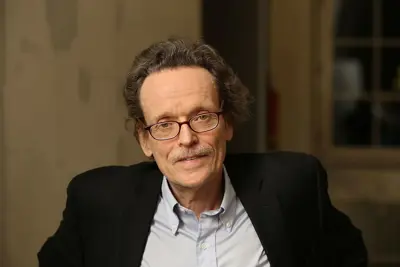
Thomas Winfried Menko Pogge is a German philosopher and is the Director of the Global Justice Program and Leitner Professor of Philosophy and International Affairs at Yale University. In addition to his Yale appointment, he is the Research Director of the Centre for the Study of the Mind in Nature at the University of Oslo, a Professorial Research Fellow at the Centre for Applied Philosophy and Public Ethics at Charles Sturt University and Professor of Political Philosophy at the University of Central Lancashire's Centre for Professional Ethics. Pogge is also an editor for social and political philosophy for the Stanford Encyclopedia of Philosophy and a member of the Norwegian Academy of Science and Letters.
