Susan C. Schwab Quotes
Concluding a trade agreement is like pole-vaulting. Everything must come together at once. After the extensive preparation and the building of momentum, there is that one giant leap—with the hope that the entire body will go over the bar.
Susan C. Schwab, United States Trade Representative (Republican), “After Dohar”, Foreign Affairs, May-June, 2011
Sourced by: Eigen's Political and Historical Quotations


She was referring to an International Trade Agreement which is being negotiated with 500 different Americans working on and drafting different components of the agreements. However, 85 percent of the Americans working on the agreement were executives of large multinational corporations of lobbyists for corporations. There were very few workers or representatives of labor organizations or consumer organizations involved with the process. The result she believed would be an agreement tilted toward the interests of the large corporations and the concerns of workers and consumers would be sublimated in the process.

Ironically America bought the Louisiana Territory from the French, and the French traded Canada to England for Guadalupe. These are probably the two worst real estate deals ever made by a nation—and it was the same nation in both cases.


The TPP was the first Trade Agreement that had ever been classified as “Secret” when it was being negotiated. This was one of the most hotly debated policies of the era. Even Congress could not get a look at what was being negotiated although the Senate would have to ratify it when finished for it to become effective. .On the surface, it is outrageous that a non-military or defense activity should be secret in a democracy. What could be wrong with the Congress and the public being aware of a trade negotiation while it was being formulated and negotiated? Kirk and other apologists for the secrecy policy argue that because of the trade-off relationships among different clauses and facets of a trade treaty, there are many proposals that are made just to initiate a bargaining position, and the negotiators themselves neither expect nor intend those proposals to be a part of the final treaty. To then have groups of Americans get upset and start a lobbying position against a treaty when what they object to is not ever going to be in the treaty poisons in the public mind the entire treaty which then could be killed for something that was never real to begin with. A similar thing happened with the Obamacare legislation. Congress drafted the various clauses and many were included as part of the bargaining process or misunderstood because of poor first drafting. Opposition to those clauses set a tone of animosity against the bill as a whole. After the bill was passed, the clauses that were most unpopular or misinterpreted were the main reason that citizens gave for opposing Obamacare even though they were not in the legislation. Advocates of secrecy point out that the original Constitutional Convention was entirely secret with all the delegates agreeing that if each and every proposal that was debated were public, there would develop so much opposition that the result could never be ratified later. Yet it is hard to argue against transparency of government processes in a democracy.
Often diplomats and negotiators, coming from different cultures and different counties, and having different points of view and previous experiences, don't even have the same view of that they are there for, what is the object of their negotiations, what the problem or problems are. Sullivan observes that this often takes more time than the actual negotiations.


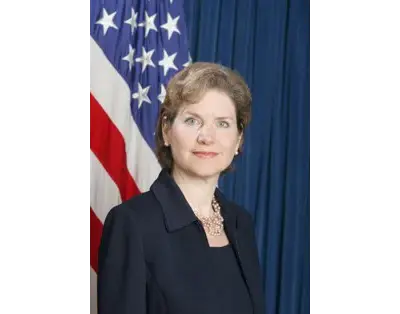
Susan Carol Schwab is an American politician, who served under President George W. Bush as United States Trade Representative from June, 2006 to January, 2009.
