Karl Liebknecht Quotes
Class struggle: external peace, international solidarity, peace among peoples. This is the sacred slogan of international socialist democracy that liberates nations.
Liebknecht, Karl. The Future Belongs to the People. Edited by S. Zimand, The Macmillan Company, 1918.


At the time America was a very minor player in the world economy and had no external military presence at all. The reason that Lafayette and others saw much of the world’s welfare dependent upon the welfare of America and the success of the American Revolution was because of the concept of a democracy and a republic as opposed to a monarchy and autocracy which was how the rest of the world was governed. If the American experiment succeeded, freedom and democracy would spread as a result of the example. If America failed, reform the world over suffered. And Lafayette was right. America survived and its influence changed virtually all of Europe and much of the rest of the world as well.


Vladimir Lenin. This is a very important historical quotations. It was made by Lenin soon after the 1917 Russian Revolution and surprisingly to most he declared that the exporting of the Communist Revolution was more important than the national interest of communist Russia. Many Western nations, including the U. S. sent troops to part of Russia on various pretexts and it appeared to many that the West was ganging up against Russian Communism and interfering with their internal affairs. However, in effect, the new Russian state, with the attitude expressed by this quotation, was declaring a type of revolutionary war on all the capitalist nations who saw this fledgling mess of a country as a potential threat. They were right.

Vladimir Lenin

America was the only democracy in the world. If it failed, democracy would not develop in the rest of the world. Today, most nations are democracies and in part based on the United States democracy. Lafayette realized that.


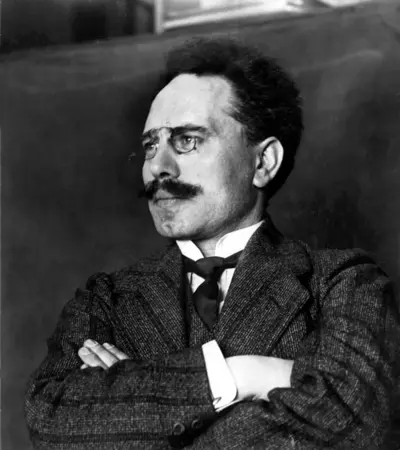
Karl Paul August Friedrich Liebknecht (German: [ˈliːpknɛçt] (listen); 13 August 1871 – 15 January 1919) was a German socialist politician and theorist, originally of the Social Democratic Party of Germany (SPD) and later a co-founder with Rosa Luxemburg of the Spartacist League and the Communist Party of Germany, which split from the SPD after World War I. He is best known for his opposition to the war in the Reichstag and his role in the Spartacist uprising of January 1919. The uprising was crushed by the SPD government and the Freikorps (paramilitary units formed of World War I veterans), which summarily executed Liebknecht and Luxemburg.
