Karl Liebknecht Quotes
Capitalism is war; socialism is peace.
Liebknecht, Karl. The Future Belongs to the People. Edited by S. Zimand, The Macmillan Company, 1918.


3rd Earl Russell of Kingston. He favored and argued for a middle ground of a capitalistic socialism or a socialized capitalism, which is what most democracies became.

One of the contradictions of capitalism is that at many points in history capitalism has caused and/or contributed to great death and suffering. However, that same capitalism has led to the development of science, technology, agronomy, medicine and education which has saved and preserved millions of lives and raised the standard of living more than anything else.


The first sentence is often quoted by conservatives in defense of the capitalistic system. However most do not realize that Haldane was actually a socialist who was opposed to capitalism. They were unaware of the second sentence which would make them as unhappy as the first made them happy.


Li was one of the leaders urging force to repress the demonstration. He was particularly offended by the Chinese students carrying the large “Statue of Liberty,” believing that this was an overt attempt to destabilize China. This was not known till the publication of the so-called “Tiananmen Square Papers” in 2001. The Chinese government claimed that these were forgeries.


At the time extreme socialist doctrine was that the state should own the factories and the other means of industrial production. The socialists believed that the people through their government had to be able to control the economy and the private owners’ greed would always drive the economy for themselves and not for the society in general. Deal was one of the first who argued that there were other, less draconian modes of economic control like government regulation and central banks. Deat turned traitor during WWII and served in the Vichy Nazi cabinet of Pierre Laval. He was sentenced to death for treason but escaped to Italy where he assumed a new identity and then was sheltered by a right-wing Catholic religious order in the convent of San Vito, near Turin, where he wrote his memoirs and lived undiscovered until his death.
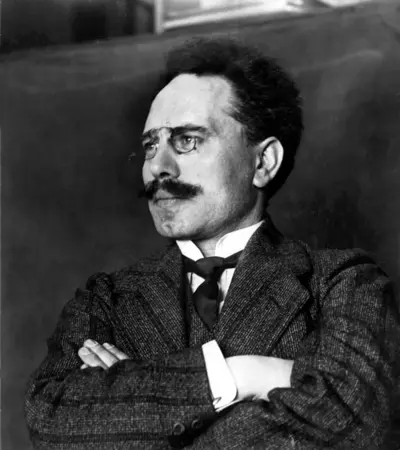
Karl Paul August Friedrich Liebknecht (German: [ˈliːpknɛçt] (listen); 13 August 1871 – 15 January 1919) was a German socialist politician and theorist, originally of the Social Democratic Party of Germany (SPD) and later a co-founder with Rosa Luxemburg of the Spartacist League and the Communist Party of Germany, which split from the SPD after World War I. He is best known for his opposition to the war in the Reichstag and his role in the Spartacist uprising of January 1919. The uprising was crushed by the SPD government and the Freikorps (paramilitary units formed of World War I veterans), which summarily executed Liebknecht and Luxemburg.
