George Bernard Shaw Quotes
In socialism, private property is anathema, and equal distribution of income the first consideration. In capitalism, private property is cardinal, and distribution left to ensue from the play of free contract and selfish interest on that basis, no matter what anomalies it may present.
Shaw, George Bernard. "Socialism: Principles and Outlook." Encyclopaedia Britannica, 14th ed., vol. 20, 1929, p. 873.


Li was one of the leaders urging force to repress the demonstration. He was particularly offended by the Chinese students carrying the large “Statue of Liberty,” believing that this was an overt attempt to destabilize China. This was not known till the publication of the so-called “Tiananmen Square Papers” in 2001. The Chinese government claimed that these were forgeries.


The first sentence is often quoted by conservatives in defense of the capitalistic system. However most do not realize that Haldane was actually a socialist who was opposed to capitalism. They were unaware of the second sentence which would make them as unhappy as the first made them happy.


Alexander Dubcek, Communist leader of Czechoslovakia, had pushed reform so far that 5 Soviet armies invaded. Dubcek was brought to Russia where he tried to persuade the Russian premier that the invasion was contrary to the principles of socialism.


Most classic socialists would not agree, but Deng’s approach created the most economically successful socialist economy in history.

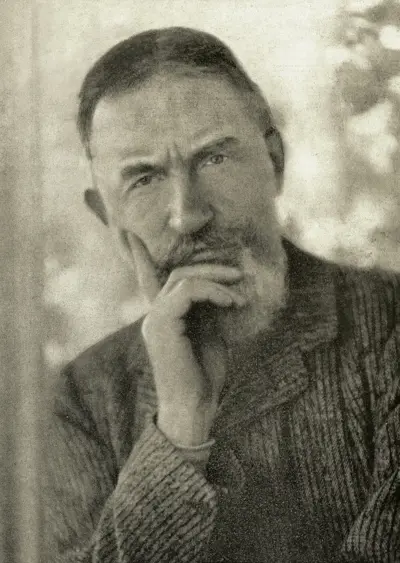
George Bernard Shaw, known at his insistence simply as Bernard Shaw, was an Irish playwright, critic, polemicist and political activist. His influence on Western theatre, culture and politics extended from the 1880s to his death and beyond. He wrote more than sixty plays, including major works such as Man and Superman (1902), Pygmalion (1912) and Saint Joan (1923). With a range incorporating both contemporary satire and historical allegory, Shaw became the leading dramatist of his generation, and in 1925 was awarded the Nobel Prize in Literature.
