Hugo Black Quotes
Citizenship is no light trifle to be jeopardized at any moment Congress decides to do so under the name of its general or implied grants of power.
Hugo Black, 1886-1971, U. S. Senator (Democrat, AL), U. S. Supreme Court Justice, Afroyuim v. Rusk, 1967
Sourced by: Eigen's Political and Historical Quotations


The Spanish colonization had been so exploitative that there was little of no infrastructure established in the Spanish colonies. Almost no institutions, no local government, existed, and there was no system of law or tolerance of minority views. Power controlled all and the Spanish (and Portuguese) were the power. When they were defeated, it was a bitter free for all in most cases unless there was a strong man and even they did not last long.

Samuel Langhorne Clemens, 1835-1910

Bush was trying to obtain the Republican Presidential Nomination and that party had come under the influence of Protestant Evangelicals who could in effect veto any candidate in the Primary election. Bush, who was already suspect with the Evangelicals, chose to make this statement with the full knowledge that there is no Constitutional citizenship requirement to believe in a god and that a number of the leading founding patriots and founders had been atheists. However his tactics were successful and the following year he was the Republican nominee. Despite this statement, he never acted on it or made it a part of his administration’s principles. Politicians are often placed in these difficult positions where they are pressured into positions not to their liking in order to politically succeed. In this case, he never did more than make the disgraceful statement. He did not adopt any policy of take any action. However, this quotation is unique in American history as the only time an American president ever stated that American citizenship should not be recognized for religious reasons only.

This was a classic debate over universal male suffrage. Rainborough had made a forceful argument for equality as a spokesperson for the Levellers in this famous debate. See {619710}. Ireton eloquently gave the classic counter-argument that property owners had much more at stake and therefore should have much more of a say on governmental affairs. Early America actually sided with Ireton, but modern America holds with Rainborough.


Roman citizenship had been reserved only for Romans. However, when Caesar spend extended time in Cleopatra’s Alexandria, he saw the effect of having a great center of learning in a city. It not only improved the quality of life, but the economic effect was profound as even though Rome was the most powerful Empire of the world, Alexandria was much larger, wealthier, and better developed. It was an effect not unlike that of a great university made throughout Europe later and America today. The scholars and intellectuals in sufficient numbers acted like a modern incubator.


What was to become the 14th Amendment was being discussed. Several of the most radical Republicans drafted language that would allow Congress to make any law regarding life, liberty or property, so that they could be sure that the States would not make their laws in a discriminatory manner. However, Hotchkiss and the majority wanted to be sure the laws were not discriminatory but they didn’t want Congress to have the power to make any law regarding life, liberty and property for every state. The current version of the 14th Amendment just prohibited discrimination in laws, not empowering the Federal Government to override the state governments in most important areas.
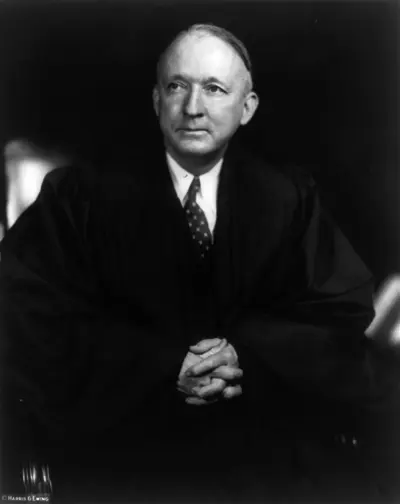
Hugo Lafayette Black was an American lawyer, politician, and jurist who served as a U.S. Senator from 1927 to 1937 and as an Associate Justice of the Supreme Court of the United States from 1937 to 1971. A member of the Democratic Party and a devoted New Dealer, Black endorsed Franklin D. Roosevelt in both the 1932 and 1936 presidential elections. Having gained a reputation in the Senate as a reformer, Black was nominated to the Supreme Court by President Roosevelt and confirmed by the Senate by a vote of 63 to 16 (six Democratic Senators and 10 Republican Senators voted against him). He was the first of nine Roosevelt appointees to the Court, and he outlasted all except for William O. Douglas.
