Alexander Meiklejohn Quotes
Free citizens have two distinct sets of civil liberties. As the makers of the laws, they have duties and responsibilities which require an absolute freedom. As the subjects of the laws, they have possessions and rights, to which belongs a relative freedom.
Alexander Meiklejohn, 1872-1964, Philosopher & President of Amherst College, United States Delegate to the Charter Meeting of USESCO, Member of the National Committee of the American Civil Liberties Union, Political Freedom 1948
Sourced by: Eigen's Political and Historical Quotations


The call for individual liberty and the right of personal property by clergy is surprising to many. This Cahier was the consensus of the Clergy of Blois in 1789. There were cahiers of several provinces of France—some by the clergy, some by the nobles. What is fascinating is the emergence of many of the pre-Revolutionary French concepts. The example of the American revolution and its principles was known throughout the educated classes of France.

He had been a Congressman before assuming the Presidency. Civil rights was a major subject of debate after the Civil War. One major issue was that of citizenship itself. Many contended that Americans were citizens of a state and dependant on the state for the protection of civil rights. However, the extent to which the Federal government could and should be the guarantor of citizenship issues was in dispute. Today with the issue settled in favor of Federal preeminence, it is hard to realize that this was very unsettled at one point in history. Garfield was one of those leading the effort for more Federal involvement and control.


Before America, many political thinkers believed that popular sovereignty and liberty are incompatible concepts—that the tyranny of the majority would trample liberty of all kinds of minorities: intellectuals, the wealthy, different religion, smaller religions, original thinking, cultural independence. However, Mandelbaum’s theory is that the social safety net, makes everyone wealthy to enough an extent that most will not trample others liberties for an even greater wealth. Inequality of wealth is tolerable if all have a modicum of a standard of living, but if some or many do not even have that, other’s liberties are less important than their own survival.

The early legal meaning of Civil Rights was very narrow. It referred to rights in normal non-governmental activities---shopping, education, social interaction, etc. However, it was the government who was depended on to enforce these rights. Later activities operated by state and local government were included like public education or the right to use a public bathroom, and for many even includes voting rights. Modern definitions consider civil rights to include all those rights to which an individual is entitled by virtue of his citizenship—including voting rights and others having to do with government—especially those of the 13th and 14th Amendments.


It is ironic that Pakistan, the creation of Jinnah’s efforts, has to a great extent adopted Sharia (Islamic Law) resulting in severe curtailment of freedom of speech and thought. Professors languish in jail for not teaching the history of Muhammed in the orthodox way, people are sentenced to death for what the local mullahs regard as blasphemy—results which from Jinnah’s point of view were terrible.


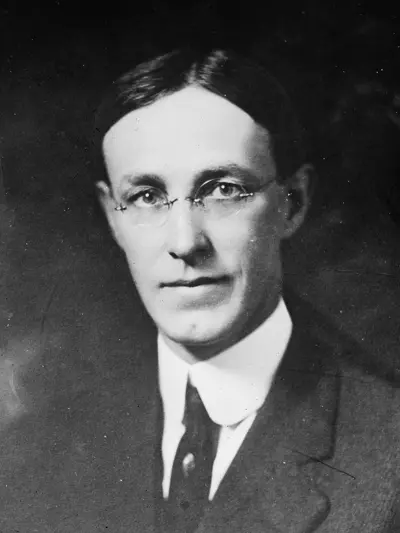
Alexander Meiklejohn was a philosopher, university administrator, educational reformer, and free-speech advocate, best known as president of Amherst College.
