Rebecca West Quotes
Before a war military science seems a real science, like astronomy; but after a war it seems more like astrology.
Rebecca West, 1892-1983, English Author, Attributed
Sourced by: Eigen's Political and Historical Quotations


Conant, a great scientist in his own right, had the confidence of the political, academic, and industrial establishment and was appointed to the Committee that was to set policy for the Manhattan Project representing President Roosevelt. Germany had been the world leader in Physics before the war. American leaders and scientists were certain that we were in a scientific race with the Germans. Even after Germany had been defeated, President Truman was told that we had beaten the Germans in the race for the bomb. Actually, although almost no one in the US government realized it then, the Germans had NO PROGRAM of nuclear weapons development at all. Hitler did not trust the Theoretical Physics and Theory of Relativity because Einstein and other Jewish scientists had been instrumental in its development. He derogatorily referred to it as “Jewish Science”. Germany bet its scientific efforts on the V2 Rockets and the Jet Airplane, both of which they were successful with but too late to have any material effect on the war. Ironically, even after most of the great German physicists were run out of Germany, there were still two of the greatest who may well have been capable of nuclear weapons development. But neither Werner Heisenberg or Otto Hahn were inclined to engage in that kind of research, and neither of them were even asked whether or not they thought it was possible. The anti-Semitic Nazis just assumed that it could not be. Truman and his associates did not find out for another year or more that there was no race. There was one OSS spy, Moe Berg, who had actually talked to Heisenberg in the midst of the war, and concluded that he not only was not working on an atomic bomb, but was not up on the latest pre-war critical research needed to develop a bomb. Hahn knew and had created the first chain reaction for which he later won the Nobel prize but he was a chemist and didn’t really understand the Physics and mathematics involved in making a weapon and was a confirmed pacifist. Ironically, his colleague, Lise Meitner who had done the physics and mathematics on that experiment was Jewish and had to flee Germany. In Denmark she gave the results to Niels Bohr, who shared them with Leo Slizard and Einstein when Bohr came to the United State and that initiated the famous letter that was sent to FDR which triggered the Manhattan Project. The German first nuclear reaction was used by the Americans because the politicians listened to the scientists, while in Germany, the politicians gave no credence to their scientists and their experiments in nuclear fission.


1st Duke of Wellington


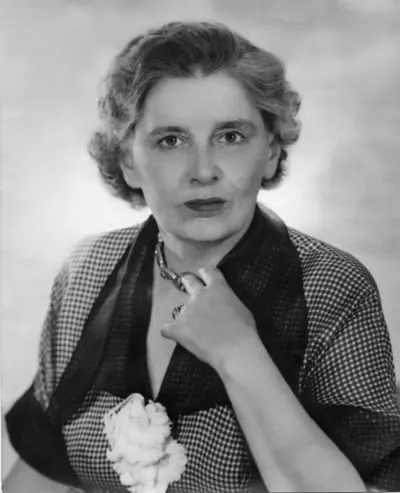
Dame Cicily Isabel Fairfield DBE, known as Rebecca West, or Dame Rebecca West, was a British author, journalist, literary critic, and travel writer. An author who wrote in many genres, West reviewed books for The Times, the New York Herald Tribune, The Sunday Telegraph, and The New Republic, and she was a correspondent for The Bookman. Her major works include Black Lamb and Grey Falcon (1941), on the history and culture of Yugoslavia; A Train of Powder (1955), her coverage of the Nuremberg trials, published originally in The New Yorker; The Meaning of Treason (first published as a magazine article in 1945 and then expanded to the book in 1947), later The New Meaning of Treason (1964), a study of the trial of the British fascist William Joyce and others; The Return of the Soldier (1918), a modernist World War I novel; and the "Aubrey trilogy" of autobiographical novels, The Fountain Overflows (1956), This Real Night (published posthumously in 1984), and Cousin Rosamund (1985). Time called her "indisputably the world's number one woman writer" in 1947. She was made CBE in 1949, and DBE in 1959, in each case, the citation reads: "writer and literary critic". She took the pseudonym "Rebecca West" from the rebellious young heroine in Rosmersholm by Henrik Ibsen. She was a recipient of the Benson Medal.
