Hugh Simons Gibson Quotes
Because of the development of infantry into the most powerful instrument of war, the Swiss, who were a fine type of infantrymen, became one of the greatest military and political forces in Europe…. the Continent was divided into fragments by feudalism and that no monarchical state had achieved its territorial unity. Under these circumstances, during the whole of the fifteenth century Switzerland was the most stable political element in Europe.
We generally do not associate Switzerland with military capability, buut in the 15th century they had one of the best fighting forces in Europe.
Hugh Simons Gibson, 1883–1954, Diplomat, Writer & Editor, U. S. Minister Plenipotentiary to Poland, “Switzerland's Position in Europe”, Foreign Affairs, October 1925
Sourced by: Eigen's Political and Historical Quotations


If a military loses a war, it has shown to be insufficient quality; if it wins, the evaluation is good. With all the talk about what makes for an effective and quality military, as the General states, it is war that is the final arbitrator. So ideally we never want to really know how good our military is.

Ever since the world dominance by the Judeo-Christian West, any military of physical victory of Muslims over Christians was considered symbolically very important by Islamic leaders.


During the presidential debates George W. Bush stated that he would be very hesitant to use the military for nation building around the world. Less than a year later, the Bush administration, faced with the September 11, 2001 terrorist attacks, launched a massive attack on the Taliban regime in Afghanistan. After fighting and winning the war, the military soon realized that they would in fact be involved in nation building. However, with the assistance of the United Nations much of the humanitarian burden was lifted from the U.S. military.

That was an ironic statement. Shortly thereafter we invaded Mexico, occupied the country, pressured it into “selling us much of what is now the Southwest of the United States, and finally left.


Mengustu seized power in a coup. However his Marxist Dictatorship was very unpopular and a civil war soon started. The poorly armed opposition used guerrilla warfare insurgency techniques. Since the government was hated by most people there was much support for the guerrilla in the villages and countryside. Mengustu adopted a policy of genocide. The areas of the country which were sympathetic to the revolutionaries were then systematically starved by the government withholding food. There was a bad agricultural crop but international donors including the United States provided much food aid. However this was withheld by the government from the areas where there was any support for the freedom fighters. Over 1 million Ethiopian citizens were starved to death. This quotation was one of the important documents that proved that there was a systematic government policy to commit genocide—in this case to “drain the sea”. After the revolution was successful, Mengustu was convicted of Crimes Against Humanity but escaped to Zimbabwe where he was given sanctuary by his fellow dictator, Robert Mugabe. There is a technical issue of whether or not this was genocide in that the exterminated people were not of one race, religion or ethnic group, but the people who were residents of the areas which were giving “aid and comfort” to the freedom fighters.


SCAF: Supreme Council of the Armed Forces. This quotation illustrates how difficult it is to establish a real democracy in Egypt in particular and most Middle Eastern countries in general. Essentially, the General wants to be sure that there is no check or control on the military in the new dupposedly democratic system. In a democracy, there are only two elements that the people have selected and who represent them—the President and the Parliament. If neither of these can command and control the military, then the people have no control over the military which then becomes a de facto aristocracy that has a veto on everything in the country. Making the situation more difficult is the fact that in Egypt (as in many non democratic nations) the military owns and controls a very large segment of businesses throughout the economy—more than any corporation or wealthy family. The civilian control of the military—one of the most fundamental aspects of the United States and every other true democracy—will not likely be possible in Egypt in the next decade or so.

Napoleon was finally stopped by a multinational coalition led by England.


For those military personnel who are assigned overseas, their children vary often are living in the country to which their parents are assigned. For those military children in the United States, our foreign policy largely determijnes whether their parent or parents may have to leave for an overseas assignment for a year or more. So foreign policy very much influences the lives of military children moreso than other youngsters.

Congress and most of the Founding Fathers were very distrustful of standing armies. They were aware that standing armies had taken over societies ever since ancient Rome and Julius Caesar.


He was referring to attacking the Barbary States. The Barbary Pirates had an incredible extortion racket going in the Mediterranean. If nations would pay them an annual sum each year, they would not attack and seize merchant ships of that country and sell the ships and goods while holding the sailors for ransom. See {640846}.


He fought in Algeria and other counterinsurgencies and then studied them. He wrote the classic book on counterinsurgency warfare. After all the mistakes the U. S. made after the successful invasion of Iraq, his book and doctrine were very influential in the change in strategy and tactics that turned the Iraq War in our favor.

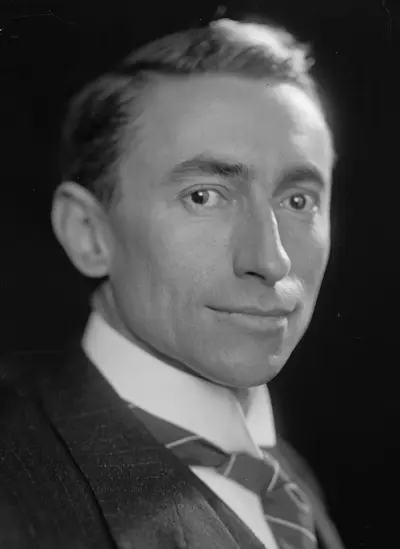
Hugh Simons Gibson was an American diplomat. He was actively involved in disarmament talks from 1925 to 1932. Throughout his career, he remained a leading proponent in the drive to establish a professional Foreign Service based on merit rather than personal wealth or political influence.
