Margaret MacMillan Quotes
As a Canadian, I've always approached international history as an outsider, neither attacking nor defending key decisions - those were made by actors who are also major figures within national historical traditions for American and British scholars.
MacMillan, Margaret. The War That Ended Peace: The Road to 1914. Random House, 2013.


The change in perception came as a result of Admiral Dewey’s May 1898 victory over the Spanish fleet in Manila Bay. The United States had bested a European power.


The then Attorney General had established a back channel to the Russian agent. There was genuine fear by the Russians and some in America that there were still many Nazis and German nationalists who would try and influence, if not take over, German politics to produce another aggressive German fascist state. The Russians had lost 22 million citizens to the Germans in the war and had faced a defeated Germany where virtually every German over the age of 30 had been cheering for and supporting Hitler a decade ago. Neither the Russians nor we and the other allies had not yet seen the remarkable turn-around that the German nation would make and the intense anti-fascist, non-military ethos that would be brought by the younger German generations. The direction of Germany was then very unpredictable.

Trout is one of the leading Madison Avenue experts on branding and image creation. He was hired by the State Department to help with its Public Diplomacy Crises of the George W. Bush administration during which even amongst our traditional allies public opinion turned from very pro America to strong anti American perception.


Soon thereafter the Spanish American War began and when McKinley favored taking the Philippines from Spain, the New York Sun stated, "We are all jingoes now, and the head jingo is the Hon. William McKinley.


A few months later, that is exactly what Germany did. She was hoping that England would not enter the war despite her treaty obligations, but she was willing to risk the possibility. The Czar had a strong espionage and intelligence service active in Germany, but, like so many other intelligence failures, the intelligence operatives and analysts had military and economic facts but had little understanding of the German culture which propelled Germany to what to most other cultures was “irrational policy making.” People and nations often engage in irrational activities, even against their own self-interest.

But that is exactly what they did and the First World War was on. Europeans and Americans have often underestimated the political force of the common membership in the Orthodox Church.


During the Cold War and afterwards many Americans attributed the problems we were having with the Soviet Union emenated from the fact that they were Communists, and our focus was anti-communism. Kennen, however argued that it was not Communism that was the cause of the Aggression of the Soviet Union. It was an extension of the Russian Culture. After the Soviet Union collapsed, and Communism was rejected by the Russians, we still had a great deal of Russian aggression and Foreign Policy problems with Russia. Kennan was right. It was the Russian culture, history, values and traditions that were the primary cause of most of the problems with Russia.

In 1884 Germany had become active in its colonization and outmaneuvered England in taking over Cameroon. Then Germany showed some interest in a part of New Guinea. The English resisted, not for any geopolitical reasons but because the British leaders did not want to be bested by Bismarck.

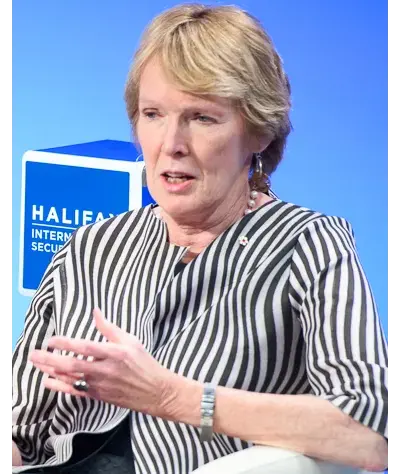
Margaret Olwen MacMillan CC CH is a Canadian historian and professor at the University of Oxford. She is former provost of Trinity College, Toronto, and professor of history at the University of Toronto and previously at Ryerson University. MacMillan is an expert on history and international relations.
