Denis Diderot Quotes
And his hands would plait the priest's entrails,
For want of a rope, to strangle kings.
Diderot, Denis. "Les Éleuthéromanes." Oeuvres complètes de Diderot, edited by J. Assézat and M. Tourneux, Vol. 9, Garnier Frères, 1875, p. 15.


Quoted in somewhat different form by Richard Nixon


A Cossack revolt had broken out in 1707 and was put down by the Czar’s forces. He then issued what might be one of the first official orders for genocide. Few Cossacks survived.

This famous quotation has been attributed to Voltaire, 1694-1778, and French Philosopher, Denis Diderot, 1713-1784. Most quotation collections erroneously attribute it to Diderot in the version “Men will never be free until the last king is strangled with the entrails of the last priest.” Both Voltaire and Diderot used the quotation as did many others opposed to monarchy and the then repressive church hierarchies. But the origin of the famous phrase was with Meslier. When the priest died, three handwritten manuscripts were found written and signed by him in which he attacked religion in general and the church and the Bible in particular. His Testament was read by Voltaire and Denis Diderot among others and he was very influential in their development as opponents of organized religion.


Many American colonists had relatives and friends in England, and Paine argued that American independence would help and not het the English people.


St. Domingue was the name of Haiti which had had the only successful national slave revolt, but it was incredibly bloody with many casualties.


Tens of thousands of Iranians were.

Anarchists are not necessarily revolutionists. Some opposed the organization of revolutions and the violence associated with them.


Howe had written Franklin attempting to stave off a American break with England. Franklin, with the approval of the Continental Congress, replied.
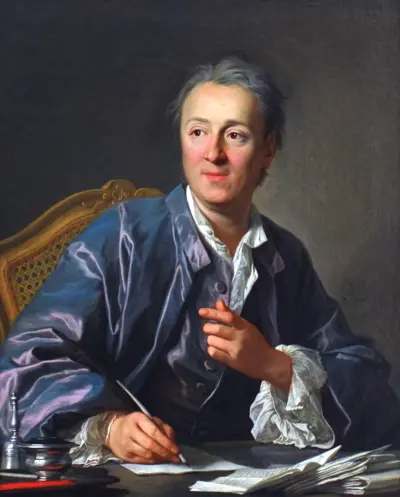
Denis Diderot was a French philosopher, art critic, and writer, best known for serving as co-founder, chief editor, and contributor to the Encyclopédie along with Jean le Rond d'Alembert. He was a prominent figure during the Age of Enlightenment.
