Robert M. Hutchins Quotes
America's experiment with government of the people, by the people, and for the people depends not only on constitutional structure and organization, but also on the commitment, person to person, that we make to each other.
Robert M. Hutchins, 1899-1977, President, University of Chicago, President, The Fund for the Republic, President, Center for the Study of Democratic Institutions, The Power of Reason, 1964
Sourced by: Eigen's Political and Historical Quotations

The government relationship to people phrase, although probably Lincoln's most famous, was not totally original. John Adams came close in a 1774 proclamation. As did John Marshall in his McCulloch v. Maryland decision. Daniel Webster's Speech on Foot's Resolution was very close. as was Theodore Parker in 1850 {629578}. There was also Thomas Cooper in 1795. But the earliest appears to be John Wycliffe in 1382 {567292}. It is not known with which of these Lincoln was familiar.


The original draft presented to him had said “We the assembled delegates of ….” Morris made one of the most important and dramatic edits in the history of humanity. See {600144} for an idea of how determinative the phrase was years later.


This appears to be the earliest use of the phrase Lincoln later made famous in the Gettysburg Address.

Ingersoll was considered to be the greatest orator and political thinker of his day, but his overt atheistic views curtailed his elected political career.


This quotation had a close proximity to Lincoln’s Gettysburg Address (see linked quote). Although this was probably Lincoln's most famous line, it was not totally original. John Adams came close in a 1774 proclamation (see linked quote). As did John Marshall in his McCulloch v. Maryland decision (see linked quote). There was also Thomas Cooper in 1795 (see linked quote). But the earliest close phrase use appears to be the English cleric, John Wycliffe, in 1382 (see linked quote). It is not known with which of these Lincoln was familiar.


Some people think that this quotation was partially copied from Lincoln’s Gettysburg Address. However, he gave this speech more than a decade earlier. Lincoln might have been familiar with it. His statue is in the U. S. Capitol.


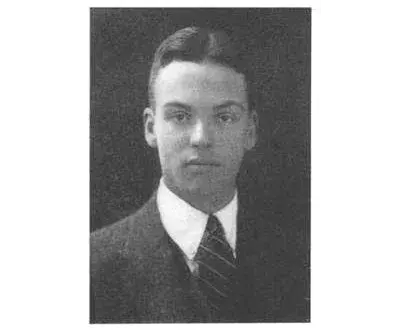
Robert Maynard Hutchins was an American educational philosopher. He was president (1929–1945) and chancellor (1945–1951) of the University of Chicago, and earlier dean of Yale Law School (1927–1929). He was the husband of novelist Maude Hutchins. Although his father and grandfather were both Presbyterian ministers, Hutchins became one of the most influential members of the school of secular perennialism.
