Moctezuma I Quotes
Adulterers … are to be stoned and thrown into the rivers or to the buzzards.
The Stoning coincidence for adultery between the Old Testament in Europe and the Middle East and the Aztecs of Mexico was probably nothing more. There is no evidence of any kind that the Aztecs of this period knew anything about the Bible.
Montezuma I, 1398–1469, [Moctezuma I], 5th Aztec Emperor, King of Tenochtitlan, Aztec Legal Code
Sourced by: Eigen's Political and Historical Quotations


This law is used to free “honor killing” murderers who have killed female relatives for what they thought was a sexual transgression that “stained the family honor.” The custom exists in some other countries but rarely with such sanction of law. In the case of Article 548 the word “witnesses” is interpreted to mean “heard about it” or even has some reason to suspect it. Each year in Syria hundreds of innocent women, and even girls are killed with impunity. In one 2007 case a 15 year old girl was kidnapped and raped. When she was freed by the police she was jailed. A cousin got her released by agreeing to marry her, but after the marriage, one of her own brothers, with the knowledge and concurrence of the rest of the family, butchered her with a knife. The family then held a party to celebrate the cleansing of their honor.


This is one of the several examples of Biblical injuntions to burn transgressors at the stake. See Related Quotes for others. Both New and Old Testamant not only did not condemn this cruelty, but actually proscribed it. This was one of the reasons that it was so difficult for Christian nations to abolish the practice. This also is a very notewothy Biblical quotation becasue the daughter in law was to be burned at the stake, even thiugh she was pregnant. In the Old Tetament, the fetus was not considered a person and preserving the life of the unborn child was not considered important becasue the fetus only became a person when the head of the baby could be seen emerging from the mother's vagina. Then and only then was their a life that commanded respect and protection.


Note that the fact that she had suffered sposal abuse. She poisoned her husband who repeadedly beat her and her children. Althoughh the evidence was heard, there was nothing that could in the then German legal system used to justify the killing of a husband. Germany was not then the only country which would not allow violent spousal abuse as a defense or a mitigating factor in the sentence. The German punishment for a woman murdering her husband was then beheading. Even as late as the mid 19th century, they were still decapitating trangressors of their laws. The Germans actually developed a special kind of sword with no point just for beheadings.


A number of the American soldiers refused to obey Calley's illegal order. Some helped some villagers to escape, and a helicopter pilot landed betreen Callery's men and the villagers they were shooting at, and ordered his helicopter machine gun crew to fire on the soldiers if they did back off. The soldiers stopped firing at the civillians. However, his and other reports of the massacre were covered up by the military for a few years. Mai Lai was not the only major war crime perpetrated by Americans in the Vietnam War; there had been a few others. But given the years of fighting and the many opportunities war crimes violations under orders were quite rare. The Viet Cong had many more war crimes that they perpetrated, and our South Vietnamese allies repeatedly committed war crimes against their own people.


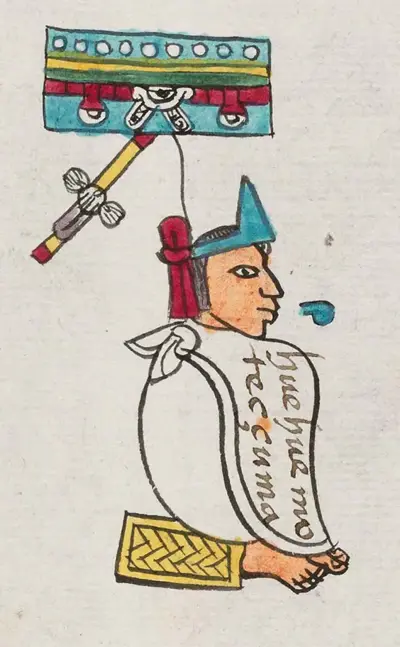
Moctezuma I (c. 1398–1469), also known as Moteuczomatzin Ilhuicamina (modern Nahuatl pronunciation (help·info)), Huehuemoteuczoma or Montezuma I (Classical Nahuatl: Motēuczōma Ilhuicamīna [moteːkʷˈsoːma ilwikaˈmiːna], Classical Nahuatl: Huēhuemotēuczōma [weːwemoteːkʷˈsoːma]), was the second Aztec emperor and fifth king of Tenochtitlan. During his reign, the Aztec Empire was consolidated, major expansion was undertaken, and Tenochtitlan started becoming the dominant partner of the Aztec Triple Alliance. Often mistaken for his popular descendant, Moctezuma II, Moctezuma I greatly contributed to the famed Aztec Empire that thrived until Spanish arrival, and he ruled over a period of peace from 1440 to 1453. Moctezuma brought social, economical, and political reform to strengthen Aztec rule, and Tenochititlan benefited from relations with other cities.
