Benjamin Franklin Quotes
A young state, like a young virgin, should modestly stay at home, and wait the application of suitors for an alliance with her; and not run about offering her amity to all the world, and hazarding their refusal.
Benjamin Franklin, 1706-1790, Member of the Continental Congress & the Constitutional Convention, Governor of Pennsylvania, President of the Pennsylvania Assembly, U.S. Minister to France, Postmaster General of the American Colonies, View of the appropriate diplomatic conduct of the early United States
Sourced by: Eigen's Political and Historical Quotations

Inscribed in the John Adams Building of the Library of Congress. On this subject Jefferson was in agreement with George Washington {37176} and his political opponent, John Adams {592705}.


The “proofs” were diplomatic assurances—treaties—that England would guarantee the territorial integrity of Belgium. The British made strong diplomatic efforts to persuade Germany not to occupy Belgium. The German’s none the less send armies in under the excuse that if they did not, the French would occupy the country and have a strategic advantage over them. Diplomacy could do no more good. England had to send troops or renege on its obligations. So England was in WWI.


The existing treaties of many of the different European countries like the NATO Treaty obliged them to assist their allies if they were involved in war. Once Austria attacked Serbia, Russia had to assist Serbia against Austria. Germany then joined with Austria and that triggered the treaty whereby France had to support Russia. And when Germany overran Belgium to attack France, England was obligated to come to Belgium’s defense. The only country that had planned for and wanted war was Germany who used her obligation to Austria as the excuse to implement her war plans (see {642092}). The entire Western World was at war when all but one nation wanted to avoid war. The communications and diplomacy of the time could not keep up with events and one of the worst wars in history ensued.


The minister had refused to be pressured by the George W. Bush Administration to sign an agreement with the US agreeing never to turn over an American or a foreign national working for America to the International Criminal Court (ICC). Even if a Peruvian or other non-American were working for an American Agency as an informant, agent, or other role, the country could not respect the treaty obligations that they had already made with regard to the ICC. Peru was “punished” losing $4 million aid. Nations were so “punished” while the State Department was spending huge sums to remedy negative opinion that so many nations had developed for the US during the George W. Bush administration. See {585493},65901 & {585496}, for more quotations on this. The US did not join the ICC Treaty as in some countries political considerations and different ethical values have labeled some American legitimate behavior as criminal and have attempted to hold individuals responsible for carrying out lawful orders. So many foreigners could understand the United States not wanting to deny Americans and others in the United States the protection of the United States Constitution, there was ire at the US pressuring others to boycott the ICC and break their existing treaties.

The Constitution was not drafted until 1787 and was ratified later. In the interim the young United States functioned under the Articles of Confederation, in a sense, our first Constitution. This clause established that the Federal Government should have the exclusive power and authority to conduct foreign affairs.


There have been times in democracies where a foreign ministry (State Department) is isolated from the elected politicians and implements a foreign policy that is at odds with the wishes of the elected officials and the majority of the nation. A good American example of this was in 1948 where America had to decide whether to support the creation of the State of Israel in the United Nations and through diplomatic recognition. The professional diplomats in the State Department had developed very close relations with Arab States, and many State Department employees were anti-Semitic. In addition, they thought the most important thing for America was not to risk the Arab oil supply. Meanwhile, the people, Congress, and President Truman were on the other side and Truman had to finally order The Secretary of State to stop his professional diplomats from pursuing their own foreign policy preferences. Even then some did not.


England in this quotation claims the right to interfere in the internal affairs of another nation if there is mismanagement or crises AND her national interests are affected.


Senator Burton was using this quotation to support the Republican isolation policy that they were advocating at the time. This quotation has been cited by almost every American politician advocating isolationism. Generally it was the Republican party that has been the isolationist advocates in America. However, after the Second World War that began to change, and in the beginning of the 21st century, the George W. Bush Administration, without any declaration of war by Congress, attacked and invaded two different countries starting the Iraq and the Afghanistan Wars. Meanwhile, the Democrats, who had been advocating American activism in foreign affairs also flip flopped and opposed foreign military intervention as Democratic President Obama withdrew American troops from the two Bush wars. The Afghanistan War was the longest war in American history.

Misha Saakashvili, the President of Georgia, the ex-Soviet State, had a good bit of support in American political circles and decided to start a military conflict with Russia attacking a disputed area whose people had rejected Georgia and preferred the Russian affiliation and control. He was confident that the US would protect him from major retaliation. The Russians first moved troops into the attacked area and then started attacking Georgia military assets. Rice and the Russian Foreign minister were negotiating a cease fire on which they agreed to details and were going to impose them on Georgia. However, Lavrov demanded that Georgia President Saakashvili be deposed. Either nation had the power to do this, and both had in many past instances deposed or overthrown the leaders of other nations—democratically elected or not. This quote is very interesting because in this particular case the United States was stating its idealistic policy and not its “real-politic: that it exhibited in helping to bring down and depose democratically elected in Iran, Chile, Vietnam, Venezuela, Haiti, and others. Ironically, there were many in the US who wanted Saakashvili deposed for unilaterally starting a military conflict Russia that had to involve the U. S.

Some people believe that the United States pressured Pakistan to enable America to support the Mujahideen in their effort to fight the Russian occupation of Afghanistan. Actually the President (and virtual dictator) of Pakistan wanted aid from America and was offering bases. America did not want bases but did want a platform for arming and training the Mujahideen, Pakistan allowed us to use Pakistan as a platform. We increased our foreign aid to Pakistan by 500 percent. There was no arm twisting.


Because the Senate has not ratified some international treaties, the United States does not participate in some international efforts to create international rules and law. The reason for non-ratification is generally given as potential loss of American sovereignty. At the same time, we spend billions of dollars trying to influence and shape the world along free market, democratic lines, and then are not able to participate in some of the most important forums where we could do just that. It is a constant dilemma and the Senate goes both ways depending on its mood, public opinion at the time and the political composition of the Senate. See {637031} and {637032}.
Individual countries are bound only by the treaties and compacts that they have signed and ratified. So very often someone will allege that a country has violated international law, but that nation may not have signed the Treaty or Compact that binds them, so thy may not be in violation at all whereas some other country in similar circumstances would be. Also, many countries (including the United States) sign treaties but take exception to some of the provisions. Then there are not bound by that provision. This is what makes International Law so complicated and difficult to understand.
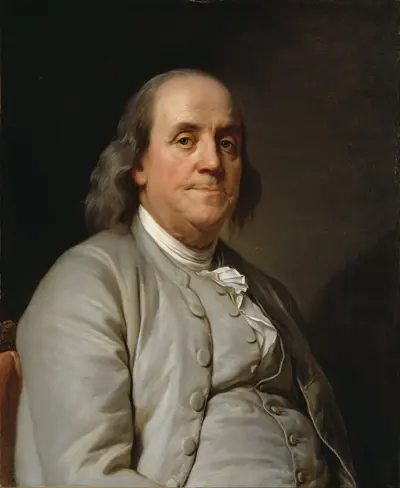
Benjamin Franklin FRS FRSA FRSE was one of the Founding Fathers of the United States. A polymath, he was a leading writer, printer, political philosopher, politician, Freemason, postmaster, scientist, inventor, humorist, civic activist, statesman, and diplomat. As a scientist, he was a major figure in the American Enlightenment and the history of physics for his discoveries and theories regarding electricity. As an inventor, he is known for the lightning rod, bifocals, and the Franklin stove, among other inventions. He founded many civic organizations, including the Library Company, Philadelphia's first fire department, and the University of Pennsylvania.
