Stephen Lucius Gwynn Quotes
A Protestant population does not willingly allow education to be controlled for it by Catholics …
Stephen Lucius Gwynn, 1864–1950, Irish journalist, Protestant Nationalist Politician, Member of the British Parliament, “Ireland, One and Divisible”, Foreign Affairs, December 1924
Sourced by: Eigen's Political and Historical Quotations


Orangemen were the ulta Protestant Nationalists of Northern Ireland. Both Protetants and Catholics had their extremists who publicly spewed their hate, desire for exclusivity, and insults with little moderation from moderates who always risked retaliation from the extremists even of their own religion, not unlike the situation of the beginning of the 21st century, where Muslim moderates were cowed and intimidated by the religious Islamic extremists.


The Soviet state had varied views regarding religion in different times. In the early days of the Russian Revolution, the Russian Orthodox Church was a major supporter of the Csar and serfdom. That caused a certain hostility to the Russian Church. That Church meanwhile had previously been extremely hostile to Jews and Roman Catholics and never recognized Protestant Churches. So Russians as a group were already discriminating against all religion except the Russian Orthodox Church before the Communist Revolution took place. When the Russian Communists were well entrenched in power, they saw the Russian Church as an obstacle to modernization and were hostile to any group that had a loyalty to any force or deity that was not the Soviet State.

This is a particularly interesting historical quotation because it succinctly gives a history of the various horrors of religious strife in British history—a history that was very well known to the American Founding Fathers and the general American Colonial population. This history was the major driver behind the public insistence for the Bill of Rights and the 1st Amendment which erected a wall of separation between church and state with government never favoring or abetting any particular religion.

New Ross was under siege by Cromwell and his English Parliamentarian troops. After two days, the town tried to negotiate terms of surrender and one of the main things they asked for was freedom of religion to practice Roman Catholicism. This famous response set the stage for religious bigotry over the next years. Cromwell’s reasons for not allowing Catholicism to be practiced was not only one of religious zeal. At the time, the Roman Catholic Church was a major geopolitical power under a Pope who commonly supported or even dispatched troops for geopolitical and religious ends. The Vatican was particularly resentful of England for separating from the Church and asserting that the King of England was the head of the Church and not the Pope. Therefore Cromwell and many Englishmen had to deal with the reality that every practicing Catholic in the realm was a potential spy, traitor, and/or rebel. This fear of control of countries by the Pope strongly affected America, and was responsible for the defeat of the first Catholic Presidential Candidate, Al Smith. It was also a major factor in the election of John F. Kennedy so he dealt with it head on.
Not all the relations between Irish Catholic and Protestants were hostile. There was a commonality in their Irish nationality and many protestants—especially the educated and more sophisticated—were opposed to the restrictions imposed by England on the rights of the Roman Catholic to practice their religion. See {639274} for another example.

France, like the other European nations had suffered through the bloodbaths and civil and other wars including the Protestant Reformation, the Holocaust and others. They. like the Untied States chose a separation of church and state—a secular government to combat the inner and intrareligious bloodbaths that have historically killed millions.


Kennedy was being hurt be fears that as a Catholic, he would be beholden to the Pope and the Catholic Bishops. There were many protestants who believed that the Catholic Church was antithetical to democracy and some who even believed that Catholicism was the religion of Satan. Kennedy decided to confront the issue head on.


This was the beginning of the inquisition.

Despite the fact that the statues were holy symbols to Buddhists, they were offensive to Muslims who say statues as “graven images” prohibited by the Koran. See Wakil Ahmad Muttawakil {608419} and Jamal’s other quotation {604665}.

Catholics were blamed by some for the defeat of Henry Clay in 1844. Anti catholic sentiment was high:. Johnson was then a Congressman representing a district where there were few Catholics and strong anti-Catholic feeling.

While not in the Koran, this attributed statement is the basis for the ban on non-Muslims going on a Hajj and going to the most holy Muslim places—Mecca, Mina, Muzdalifa, and Arafat as well as the anti-religious hostility to all religions but Islam which is present in some Muslim countries.
The letter was in response to the King’s letter commanding him and all the other governors to massacre all the Protestants in his district. Montmorrin, a Catholic, died suddenly and shortly thereafter. It is supposed he and one other objector (Viscount Orthez) were poisoned by order of King Charles. All the other governors obeyed and 50,000 Protestants were murdered in the Massacre of Saint Bartholomew.

Muslims had engaged in violent demonstrations to insist on more Sharia law and the curtailment of behavior that the Muslim Mullahs determined to be contrary to Sharia and Islam. In Nigeria Muslim violence and intimidation had at the time already caused one of the Nigerian states to adopt Sharia instead of civil law. Many Muslims continued the violence in order to spread the adoption of Islamic law. In most counties, there were threats of law enforcement crackdowns to curtail the Muslim violence and attacks on Christians and other religions. In Nigeria however, the Christians under Akinola’s leadership made this not so subtle veiled threat to retaliate. It seems to have worked in the short run although the religious tensions remained very high and no one knew whether or not religious violence or even war would break out.
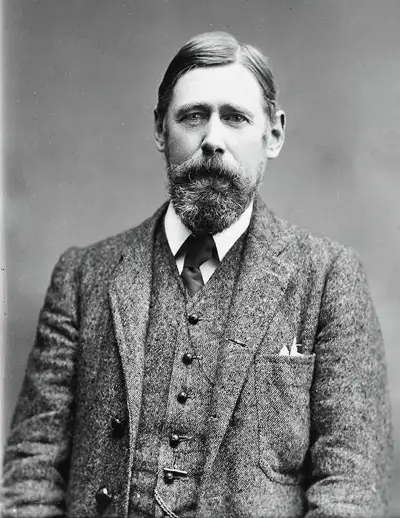
Stephen Lucius Gwynn was an Irish journalist, biographer, author, poet and Protestant Nationalist politician. As a member of the Irish Parliamentary Party he represented Galway city as its Member of Parliament from 1906 to 1918. He served as a British Army officer in France during World War I and was a prominent proponent of Irish involvement in the Allied war effort. He founded the Irish Centre Party in 1919, but his moderate nationalism was eclipsed by the growing popularity of Sinn Féin.
