Benazir Bhutto Quotes
A people inspired by democracy, human rights and economic opportunity will turn their back decisively against extremism.
Bhutto, Benazir. Reconciliation: Islam, Democracy, and the West. Harper, 2008.


Islamic religious extremists do not allow freedom of religion, freedom of speech, freedom of the press, right to life, freedom from torture and mutilation, self-government, gender equality, protection of children or women from violence, sexual freedom, freedom of expression, reproductive rights for women, right work, which are just a few. The modern Islamic extremists allow about the same human rights as did the Christian Kings and the Church of 1000 years ago. Ironically, it is less respect for human rights that many of the great Islamic societies provided 1000 years ago.


From the latter part of the 20th century onward, religious nationalism was no longer a force for most religions and nations except Muslim countries. It was the only religion left where a large proportion of the adherents saw no distinction between the religion and the government. Nations that had separation of church and state were not conducive to the extreme fundamentalist form of Islam where the Secular Leader and the Religious leader was to be embodied as a single person. As a result Islamic religious nationalists argued for a Theocracy and at times fought for it with violent means. The secular government typically, to curtail the violence and prevent a religious takeover, often outlawed the extreme religious Islamic parties. While Aslan cites the Muslim Brotherhood failure in Egypt as a desirable outcome, the only way the other forces of Egyptian society could prevent the Islamists from taking over turning the country into a theocracy was to forcefully repress the extremists. The Turkish outcome was much better, but there was the threat of repression of the Justice and Development Party when it won a majority control of the government. There were explicit threats that if it tried to weaken the secular nature of the government as Ataturk had formulated it, the military would come “out of the barracks” and oust the government as they had done before. There were nations like China which persecuted religions such as certain forms of Christianity, but those religions were not fighting for religious nationalism. They only wished the freedom to practice their religion and had no program or theology that argued for Christianizing the government. The Tamil Hindus of Sri Lanka did not want a Hindu government and were perfectly free to practice their religion. The problem was that they felt that there was systemic social and economic discrimination against the Tamils and they fought for independence—not of a Hindu state, but of a secular, nondiscriminatory state of equal opportunity.

In a particularly acrimonious House debate on the largest military appropriations bill in the history of the country, the speaker limited an opponent to 45 seconds to argue against the pending bill. Jacobs shouted his protest:


Austin, seeking support for Texas independence and freedom, appealed, not to the economic or territorial benefits for, but to their ideals to aid another people obtain liberty. America has almost been unique among nations in that lives and treasure has been spent to aid others obtain liberty with no material benift to the country. While it is true that we have not supported ALL efforts to obtain freedom (Haiti being the most egregious example) there are many causes in which America assisted for no material reqard.


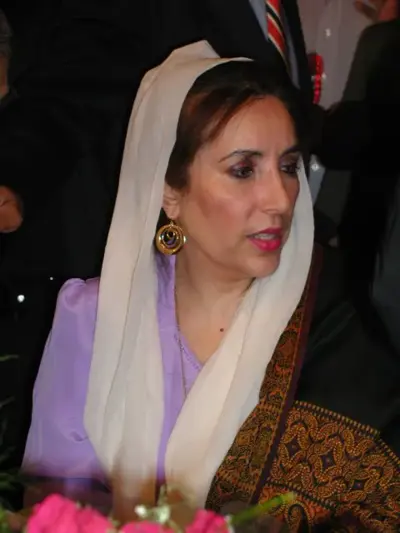
Benazir Bhutto was a Pakistani politician who served as Prime Minister of Pakistan from 1988 to 1990 and again from 1993 to 1996. She was the first woman to head a democratic government in a Muslim majority country. Ideologically a liberal and a secularist, she chaired or co-chaired the Pakistan Peoples Party (PPP) from the early 1980s until her assassination in 2007.
