Edward Bruce Hamley Quotes
A moth-eaten rag on a worm-eaten pole, It does not look likely to stir a man's soul. 'Tis the deeds that were done 'neath the moth-eaten rag, When the pole was a staff, and the rag was a flag.
Edward Bruce Hamley, 1824-1893, British General and Writer, Contemplating the colors of the 43rd Monmouth Light Infantry
Sourced by: Eigen's Political and Historical Quotations

In the attack on Fort Wagner, the color bearer was killed as was the Commanding Officer, Colonel Shaw. Carney raised the flag and led the men up the sand wall into the Confederate midst. They were vastly outnumbered and then retreated. Carney was the first Black to win the Medal of Honor.


Song traditionally sung at the end of British Labour Party meetings


Ataturk was a young major at the time commanding troops of a weak and corrupt Ottoman regime. However a combined English and French (the strongest military powers in Europe) invasion of the Gallipoli Peninsula threatened to capture the Turkish capital, Constantinople. Ataturk alone rallied the Turkish defenders and fought the invaders to a standoff in long drawn out battle with huge casualties on both sides. Ataturk became a national hero. Although Ataturk thereafter was very reluctant to use military force or endanger troops, the thing he always thought worth the supreme sacrifice (including his own) was the independence and sovereignty of the nation. See {584502} for his continuing belief in this type of sacrifice.

“Volk” loosely translated means “the people.” However it carries the connotation of a unity that “the people” does not.


The 3rd verse is rarely sung because of its reference to the then existing and generally accepted system of indentured servitude and slavery.


Quintus Horatius Flaccus. This famous quotation has been echoed in virtually every language and every country of the world. However, see Ernest Hemingway for a counter view.


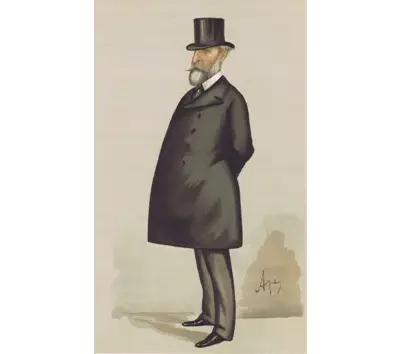
Lieutenant General Sir Edward Bruce Hamley KCB KCMG was a British general and military writer and a Conservative politician who sat in the House of Commons from 1885 to 1892.
