Heywood Broun Quotes
A liberal is a man who leaves the room when a fight begins.
Heywood Broun, 1888-1939, Columnist & Unsuccessful Candidate for Congress (Socialist), Quoted in Metcalf, Modern Humorous Quotations, Viking, 1986
Sourced by: Eigen's Political and Historical Quotations


Machiavelli was lying on his deathbed and was visited by the local Bishop who asked him, “Do you now forsake the Devil?”

This is an excellent example of the political dirty trick of demonizing the opposition. There are Americans of different political persuasion all over the country. However, Limbaugh takes his opponents and describes them in terms that would be used for sexual predators or would be rapists or robbers. “Hiding in the shadows” and “lurking” are not contexts that we would normally use to describe political activists—especially those as numerous as liberals. Pejorative language can do the demonizing especially if it is repeated over and over again. This was illustrated by Joseph Geobbels the Nazi German propaganda minister who turned the technique into an art form. Ironically, he too in 1933 used the same technique to demonize liberals as well. See {601659}.


In 1946 the maneuvering and posturing of the United Nations delegates led him to remark: Viscount Cecil of Chelwood

This quotation is noteworthy because it is typical with every politically extremist group. Negotiation and compromise are unacceptable and even dangerous to them. Almost a century after this quotation the Tea Party was making the same kind of statements.


“Liberalism” was a catch all Chinese term at the time which was very derogatory in Communist vernacular very much like the negative connotation of liberalism to American Conservatives at the turn of the millennium 1990-2010.

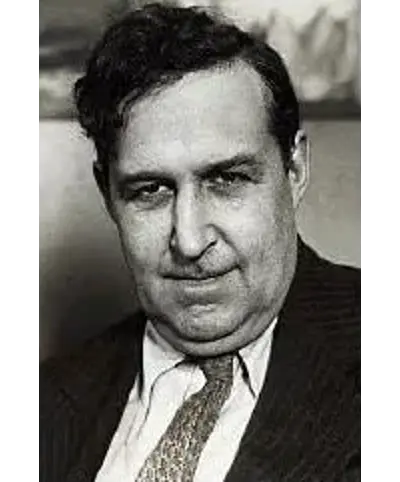
Heywood Campbell Broun Jr. was an American journalist. He worked as a sportswriter, newspaper columnist, and editor in New York City. He founded the American Newspaper Guild, later known as The Newspaper Guild and now as The NewsGuild-CWA. Born in Brooklyn, New York, he is best remembered for his writing on social issues and his championing of the underdog. He believed that journalists could help right wrongs, especially social ills.
