Aristide Briand Quotes
A country grows in history not only because of the heroism of its troops on the field of battle, it grows also when it turns to justice and to right for the conservation of its interests.
Aristide Briand, 1862-1932, French Prime Minister, Nobel Laureate in Peace, Speech, September 10 1926, in Geneva, welcoming Germany into the League of Nations
Sourced by: Eigen's Political and Historical Quotations


See Carl Schurz {33636} for an 1872 version and G. K Chesterton for perspective {597471}.


Greek invaders were marching on Istanbul


Every major Western power and Japan were looking to control parts of China for their own mercantile advantage. The Emperor, her adopted son, had stated that under no circumstances would the Chinese fight, but Cixi issued this decree, in effect, overruling the Emperor—a remarkable occurrence.


Lodge was particularly concerned that under the proposed treaty the United States would be obligated to support the League of Nations military efforts regardless of American public opinion or Congressional action.
Russia, from the old Soviet Union days, had the only gas pipeline into Lithuania and took advantage of their monopoly by charging the Lithuanians 15 percent more than they charged other European nations where the Russians had some energy competition. The Lithuanians, decided to tie up a very large vessel at an island in their harbor to which Liquid Natural Gas (LGN) could be delivered by ship and converted to gaseous form and piped onto the mainland to provide competition for the Russians. However, the island was a bird sanctuary that was not supposed to be used for anything that might change the ecological balance of the island. This quotation shows that in some circumstances, environmentalists are willing to compromise to balance the benefits and costs.
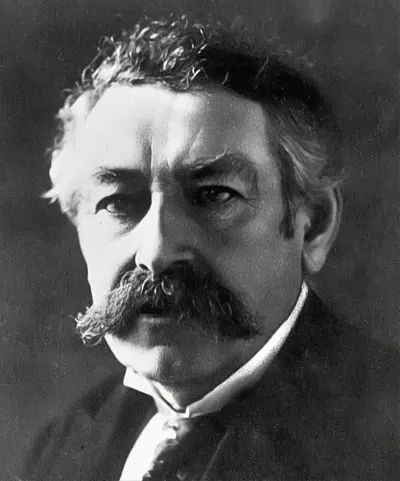
Aristide Pierre Henri Briand was a French statesman who served eleven terms as Prime Minister of France during the French Third Republic. He is mainly remembered for his focus on international issues and reconciliation politics during the interwar period (1918–1939).
