Stephen J. Field Quotes
A convict is not to be scourged until the flesh fall from his body and he die under the lash, though he may have committed a hundred offenses, for each of which, separately, a whipping of twenty stripes might be inflicted.
Stephen J. Field, 1816-1899, U. S. Supreme Court Justice, O'Neil v. Vermont, 1891
Sourced by: Eigen's Political and Historical Quotations

William the Conqueror. This is one of the first if not the first nationwide abolition of capital punishment in history. Ironically, the two alternatives that the abolition law allowed would both be illegal and repugnant to us today even though we allow capital punishment.

The capital punishment debate was raging in Europe. Belgium and parts of Switzerland had just abolished the death penalty.
Named after penal reformer Johne Howard, 1726-1790. Howard Associations have since been organized in many countries.

Einstein had changed his mind. He like almost everyone else at the time favored the death penalty, but in 1927 came to the new conclusion for the same reasons that many American politicians stated 70 years later. He had no compunctions against capital punishment for murderers who were dangers to society, but the potential error of the justice system led him to oppose state sanctioned execution. At the time the number of errors in capital cases that had been demonstrated were few. But as a scientist, Einstein knew that all human endeavors were prone to error. He was a strong law and order supporter however—see {588606}.


Livermore's argument fell on deaf ears, and the amendment was passed over the objection of a few arch-conservatives.


He had witnessed thousands of Crucifixions and did not favor the method of execution.


This is one of the earliest views that insane people should not be criminally punished for their acts. To a great extent, Constantine and his contemporaries believed that insanity was the work of the Devil or demons and therefore one should not sympathize with the condition either.

The victim would be slowly cut 1000 times in ways to inflict more and more pain but not kill the victim rapidly.

Wade was urging the Prince to abolish the Death by 1000 Cuts {641825} and simply rely on beheading the form of execution for “lesser” crimes. Note that the Prince’s fears and arguments parallel the same given by modern proponents of the Death Penalty—without it criminals would not be controlled and instability would ensue.
See the related quotes for the "ancient views" to which her referred.
Queen Boudicca of the Iceni tribe had revolted in Roman Britain. The Romans where particularly harsh in putting down revolts but under Emperor Nero and Caligula after him, they sunk to the deepest of barbarities,


This has been the case in EVERY jurisdiction that has had capital punishment. Capital punishment does provide vengeance for victims, relatives and society. And in many societies execution is less expensive than prison for life. But it has never curtailed crime despite the example. In London, they used to have public executions as examples to inhibit crime. While the crowd was watching a pickpocket be hung, other pickpockets were relieving many spectators of their wallets and watches.


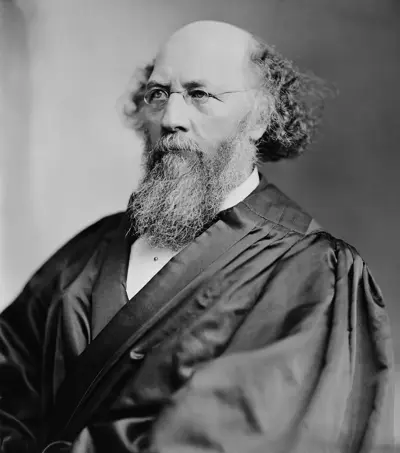
Stephen Johnson Field was an American jurist. He was an Associate Justice of the United States Supreme Court from May 20, 1863, to December 1, 1897, the second longest tenure of any justice. Prior to this appointment, he was the fifth Chief Justice of California.
