John Stuart Mill Quotes
A bureaucracy always tends to become a pedantocracy.
John Stuart Mill, 1806-1873, Member of Parliament, British Political Economist, Quoted in James Wood, Dictionary of Quotations, 1899
Sourced by: Eigen's Political and Historical Quotations

the legal and regulatory system While this is generally true, the same very efficient private organziations sometimes act very efficiently against the interest of the public, or a part of the public in a discriminatory manner. There are other functions which for one reason or another no private organization chooses to take on, and we are left with government doing the best it can. And there are some areas where th cost of private service is just too high, and government assumes it for reasons of affordability. However sometimes there is a major problem created by competitive private organzaitions in such heated competition that the servie is terrible. In early America, Fire Fighting was assumed by private organzations, who would often fight with one another over who would handle the fire while entire neighborhoods burned down. The result was public fire service which is now the norm despite the fact that there might be better ervice in with a private company. America has attemted to balance this problem and tends to have done so better than most countries athough the issue is in contant debate in American politics.


Gates was then a mid-level functionary at the CIA. His ability to tell the truth to powerful people got him promoted and he eventually became director himself as well as the Secretary of Defense. The Department of Agriculture at the time was generally known as a very bureaucratic organization.


3rd Earl Russell of Kingston


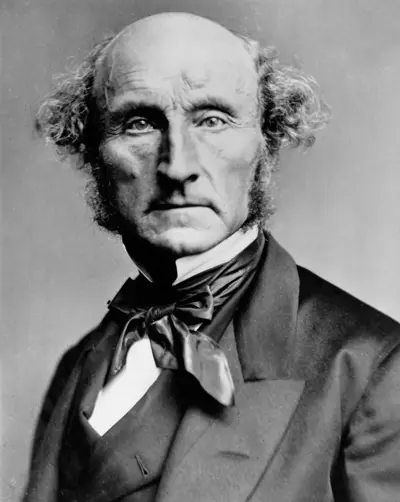
John Stuart Mill, usually cited as J. S. Mill, was an English philosopher, political economist, Member of Parliament, and civil servant. One of the most influential thinkers in the history of classical liberalism, he contributed widely to social theory, political theory, and political economy. Dubbed "the most influential English-speaking philosopher of the nineteenth century", he conceived of liberty as justifying the freedom of the individual in opposition to unlimited state and social control.
