Robert Frost Quotes
A bank is a place where they lend you an umbrella in fair weather and ask for it back when it begins to rain.
Robert Frost, 1874-1963, U.S. Poet Laureate, View of Banks
Sourced by: Eigen's Political and Historical Quotations


This was in the midst of the debate over The Recharter Of The Bank bill


Banks and other lending institutions don’t want to risk their loan money. So they prefer to lend money to those who do not need it rather than those who do.


Trump as a business man was notorious for setting up business deals where his partners would put up the money. If the enterprise failed the partners were at risk and lost their money while either did not or lost very little. If money was made, however, he took a large share. He not only did this many times but actually admitted it and bragged about his ability to do that. Incredibly enough he even extended this technique to his charity giving. The vast majority of the money he did good things with through his foundation came from other people. There were many years where he gave not a penny to his own foundation, but gave away and took the credit for what was done with other people’s money. The recipients of the foundations grants mostly assumed that Trump was being generous with his own money, and he never disabused them.

[Most Americans do not realize that not wall bank deposits are insured by the Federal Deposit Insurance Corporation (FDIC). That insurance covers only a basic amount ($250,000 at the time of the quotation was written, but nothing over the basic amount. There is no federal insurance for all the stock brokerage accounts. There is private insurance that will generally protect against the failure of a particular brokerage company failure, but that would not help in an industry wide failure]


Carney was a Canadian. Under a quirk of British law, the Governor of the Bank of England need not be a British citizen so long as he is a citizen of a Country of the British Empire.

Actually, even with higher capital requirements, the banks could take more risk but then they would have to risk their own money rather than their depositors’ funds. The depositors funds are at risk but if the risk pays off, only the bank and their executives profit. The depositors get nothing. If the bank loses their risky gamble, the major loss will be covered by the Government via a bail out and/or Federal Deposit Insurance money that protects most depositors. For the Banks, its “heads we win; tails the government loses”.
The Meltdown of 2008 came a year later and Citigroup, one of the largest banks in America, had massive liquidity problems and in order to stave off bankruptcy the taxpayers had to come up with $45 Billion. The bank executives, as this quotation demonstrates, knew that they were in a very risky situation and that if the subprime mortgages started to default, the “music would stop” and they and the other banks would have a massive liquidity problem. None the less, they kept on investing more and more of their bank customer’s money and making money in what they knew was a highly risky enterprise. The greed clouded their judgment and when the music stopped and many were no longer dancing, the Meltdown of 2008 almost destroyed the entire national economy and triggered the Great Recession where the overwhelming proportion of Americans had to suffer for the greed of those who could not “stop dancing” even as they knew it was very dangerous.
After the Great Recession the Mexican bankers, like their American counterparts, tightened their credit standards so much that the only people who could get loans were the ones who didn’t need it. If banks do not make loans, it matters not that they are solid institutions that are well capitalized.


This quote is misattributed to Keynes. The first recorded version of this was a 1986 presentation given by Gary Shilling, an influential financial advisor twice named Wall Street’s top economist in a poll conducted by Institutional Investor magazine, as reported by The Advertiser newspaper of Montgomery, Alabama. The next recorded evidence is a Forbes article by Shilling in February, 1993. See linked quote.
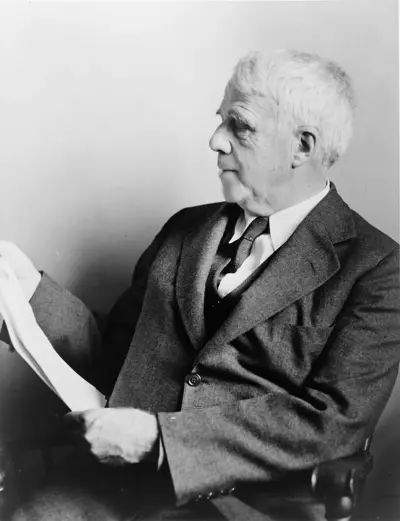
Robert Lee Frost was an American poet. His work was initially published in England before it was published in the United States. Known for his realistic depictions of rural life and his command of American colloquial speech, Frost frequently wrote about settings from rural life in New England in the early 20th century, using them to examine complex social and philosophical themes.
