Everett Dirksen Quotes
… biennial convulsion
Everett Dirksen, 1896-1969, U.S. Senate Minority Leader, (Republican, IL), description of yet another effort to amend the Senate rules regarding filibusters and cloture—voting to break the filibuster, Senate Debate January 11, 1967
Sourced by: Eigen's Political and Historical Quotations

The senator sees examples of the filibuster in ancient Rome.

The Civil Rights Act of 1964 was bitterly opposed in the senate by Southerners who had filibustered continuously. After months of debate a critical cloture vote was taken against a Senate tradition which had never voted cloture on a civil rights filibuster. Every vote was critical. Senator Engle was dying from a brain tumor, and could not walk or speak. When the vote for cloture was taken, Engle was wheeled into the Senate chamber, and in what may have been the most eloquent, poignant, creative vote in Senate history, pointed to his eyes. The vote was recorded as:. The Aye's narrowly won. The Civil Rights Act of 1964 became law.


Because of the filibuster and other procedural individual prerogatives, it is easy for a few Senators or often a single Senator to prevent a bill from ever coming to a vote. Much imaginative and excellent legislation has died in the United States Senate.


Despite having passed the House and a majority of the Senate favoring McCain’s bill, a filibuster was led by a few holdouts from his own party. Patiently, McCain assembled sufficient Senate support to break the filibuster.


He was right. Even the vaunted Southern Filibuster was broken by the strategy and tactics Johnson and Senator Humbert Humphry, the Floor Leader for the 1964 Civil Rights Bill.


In response to Administration tactics to delay a vote on the Church-Cooper proposal to limit American involvement in Cambodia after June 30, 1970, Senator Cotton asserted:
When New Hampshire's Senate defeated a bill that would decriminalize adultery:


In 1964 LBJ’s Civil Rights Bill was stalled in the Senate and was being filibustered by a coalition of conservative Republicans and Southern Democrats. Johnson needed the conservative Republican Minority Leader’s support to break the filibuster and allow a vote. Dirksen changed his position and broke the filibuster allowing the Civil Rights Act of 1964 to pass.
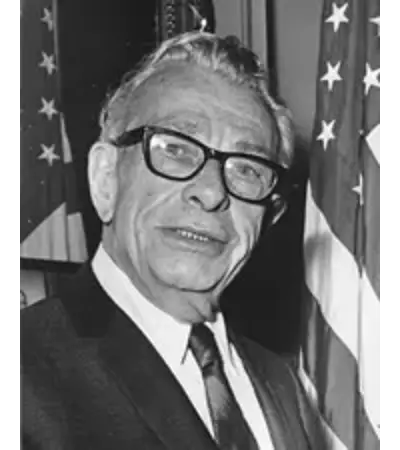
Everett McKinley Dirksen was an American politician. A member of the Republican Party, he represented Illinois in the United States House of Representatives and the United States Senate. As Senate Minority Leader from 1959 to 1969, he played a highly visible and key role in the politics of the 1960s. He helped write and pass the Civil Rights Act of 1964 and the Civil Rights Act of 1968, both landmark pieces of legislation during the civil rights movement. He was also one of the Senate's strongest supporters of the Vietnam War. A talented orator with a florid style and a notably rich baritone voice, his flamboyant speeches caused his detractors to refer to him as "The Wizard of Ooze".
