Dwight D. Eisenhower Quotes
… a loser!
In those days the party bosses picked the Vice Presidential nominee, and they picked Nixon. As the President got to know his running made, his dislike developed. In Nixon’s entire tenure as Vice President he was never invited to the private presidential quarters of the White House for a meeting or a social occasion. Eisenhower, who loved golf and played with many politicians of both parties and many celebrities would never play golf with Nixon. In part, these types of snubs and insults, were the forerunner of the later Nixon hatred of the American establishments that was revealed by the Nixon tapes.
Dwight D. Eisenhower, 1890-1969, 34th President of the United States (Republican, KS), Opinion of his Vice President, Richard M. Nixon, Quoted by his biographer, Geoffrey Perret, C-SPAN, October 25, 1999
Sourced by: Eigen's Political and Historical Quotations


Early in the year the President asked his most experienced political strategist what was likely to happen in the Presidential election that was upcoming later that year. The Vietnam War was tearing the country apart. He had lost the South because of the Civil Rights laws he has passed. For the rest of the country, the war hardliners wanted someone more aggressive than him, and the Doves wanted us out of Vietnam. Johnson, in a great political tragedy, even though he thought the war was unwinnable, could not bring himself to be the first American President to lose a war. He soon would decide to withdraw from the race but not pull out of Vietnam. See {637677} and {637678}.


Guevara and Cuban revolutionaries had gone to the Congo to “assist” with their revolution, but cultural differences between the two groups of revolutionaries nullified any assistance that the Cubans could give.


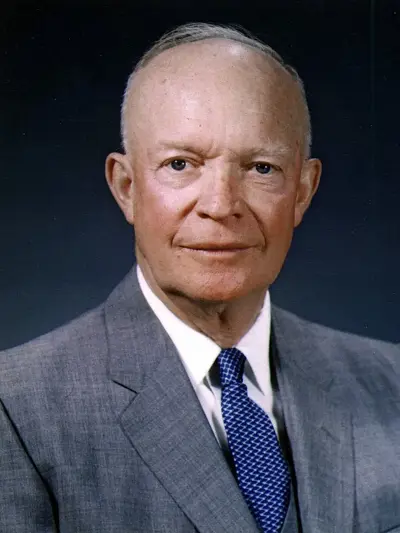
Dwight David "Ike" Eisenhower GCB OM GCS CCLH KC NPk was an American military officer and statesman who served as the 34th president of the United States from 1953 to 1961. During World War II, he became a five-star general in the Army and served as Supreme Commander of the Allied Expeditionary Force in Europe. He was responsible for planning and supervising the invasion of North Africa in Operation Torch in 1942–43 and the successful invasion of Normandy in 1944–45 from the Western Front.
