HENRY BILLINGS BROWN
The majority had held that the income tax or any tax based on income or wealth was unconstitutional (it was less than 2% only on income over $4,000--$101,000 in 2010 dollars). It took a Constitutional Amendment to have an income tax. See {587718}.
This was the infamous opinion whereby the Supreme Court upheld the “separate but equal” doctrine thereby preserving racial discrimination until the reversal over 50 years later. See the sole dissent of Justice John Marshall Harlan whose views were those that eventually prevailed although at the time all the other justices voted with the majority. See {583706} and {583703}.
This was the infamous opinion whereby the Supreme Court upheld the “separate but equal” doctrine thereby preserving racial discrimination until the reversal over 50 years later. See the sole dissent of Justice John Marshall Harlan whose views were those that eventually prevailed although at the time all the other justices voted with the majority. See {583706} and {583703}.
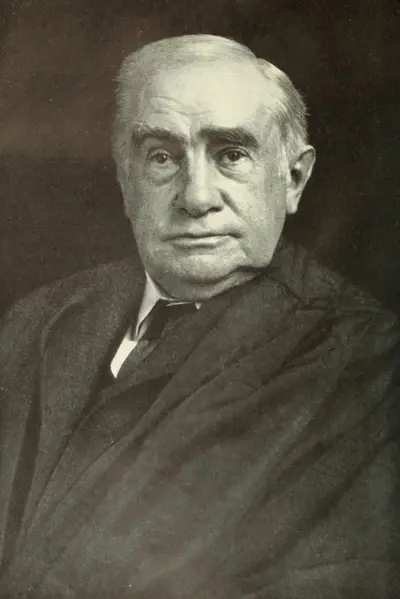
Henry Billings Brown was an associate justice of the Supreme Court of the United States from 29 December 1890 to 28 May 1906. A respected lawyer and U.S. District Judge in Detroit, Michigan, before ascending to the high court, Brown authored hundreds of opinions in his 31 years as a federal judge, including the majority opinion in Plessy v. Ferguson in 1896, which upheld the legality of racial segregation in public transportation and implicitly provided approval for the system of Jim Crow laws until Brown v. Board of Education in 1954.
