Henry Billings Brown Quotes
If the civil and political rights of both races be equal one cannot be inferior to the other civilly or politically. If one race be inferior to the other socially, the Constitution of the United States cannot put them upon the same plane...
This was the infamous opinion whereby the Supreme Court upheld the “separate but equal” doctrine thereby preserving racial discrimination until the reversal over 50 years later. See the sole dissent of Justice John Marshall Harlan whose views were those that eventually prevailed although at the time all the other justices voted with the majority. See {583706} and {583703}.
Henry Billings Brown, 1836-1913, U. S. Supreme Court Justice, Plessy v. Ferguson, 1896
Sourced by: Eigen's Political and Historical Quotations


Quoted in the Court’s notes of the meeting


Blacks were fighting and dying in WWII. They were equal when they were under fire, but otherwise not. The war was against fascist protagonists whose creed was inequality while the allies were upholding freedom and equality. But making that aspiration a reality was difficult.


This statement in the President’s Second Inaugural. Infuriated the politicians of the Southern States. Remember, at the time there was brutal discrimination throughout most of the South, and more important to the South than the fact if the discrimination was their perverse view that this was a right, proper and necessary state of affairs for the welfare of the people and was required by Christianity’s mandates as they read the Scripture. For the President to state so publicly that discrimination was contrary to the law, justice, good faith, citizenship and fairness was a major shock. Since the early days of reconstruction after the Civil war in the Grant Administration, no president had spoken so publicly and openly against the Southern status quo.


Lieber was assigned by President Lincoln to study the then international laws of war and prepare a manual for the guidance of union troops in the Civil War. Lincoln then issued the document as a general order. This statement was critical in inhibiting the South from making good on their threat to enslave any Black Union Soldier Captured and to execute any Union Black soldier who was a runaway slave from the South. Lincoln threatened to retaliate and also to hold senior Confederate officers accountable for following these rules. General Sherman and other Union Senior Officers executed a few Confederate soldiers who violated rules of the order and the “illegal” practices stopped, and with few exceptions the senior officers of both sides followed Lieber’s rules. These rules, with few modifications, governed U. S. military policies and rules through the Second World War.


This was the first named Civil Rights Act passed in the United States. It was passed over the veto of President Andrew Johnson, a Southerner, who tried to thwart Congress’s efforts at Reconstruction.

This was the infamous opinion whereby the Supreme Court upheld the “separate but equal” doctrine thereby preserving racial discrimination until the reversal over 50 years later. See the sole dissent of Justice John Marshall Harlan whose views were those that eventually prevailed although at the time all the other justices voted with the majority. See {583706} and {583703}.
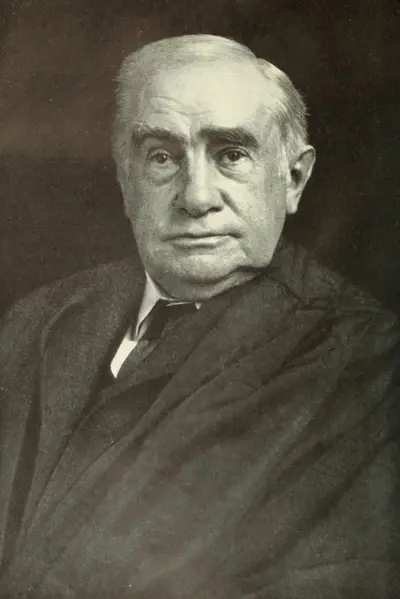
- Born: March 2, 1836
- Died: September 4, 1913
- Nationality:
- Profession:
Henry Billings Brown was an associate justice of the Supreme Court of the United States from 29 December 1890 to 28 May 1906. A respected lawyer and U.S. District Judge in Detroit, Michigan, before ascending to the high court, Brown authored hundreds of opinions in his 31 years as a federal judge, including the majority opinion in Plessy v. Ferguson in 1896, which upheld the legality of racial segregation in public transportation and implicitly provided approval for the system of Jim Crow laws until Brown v. Board of Education in 1954.
